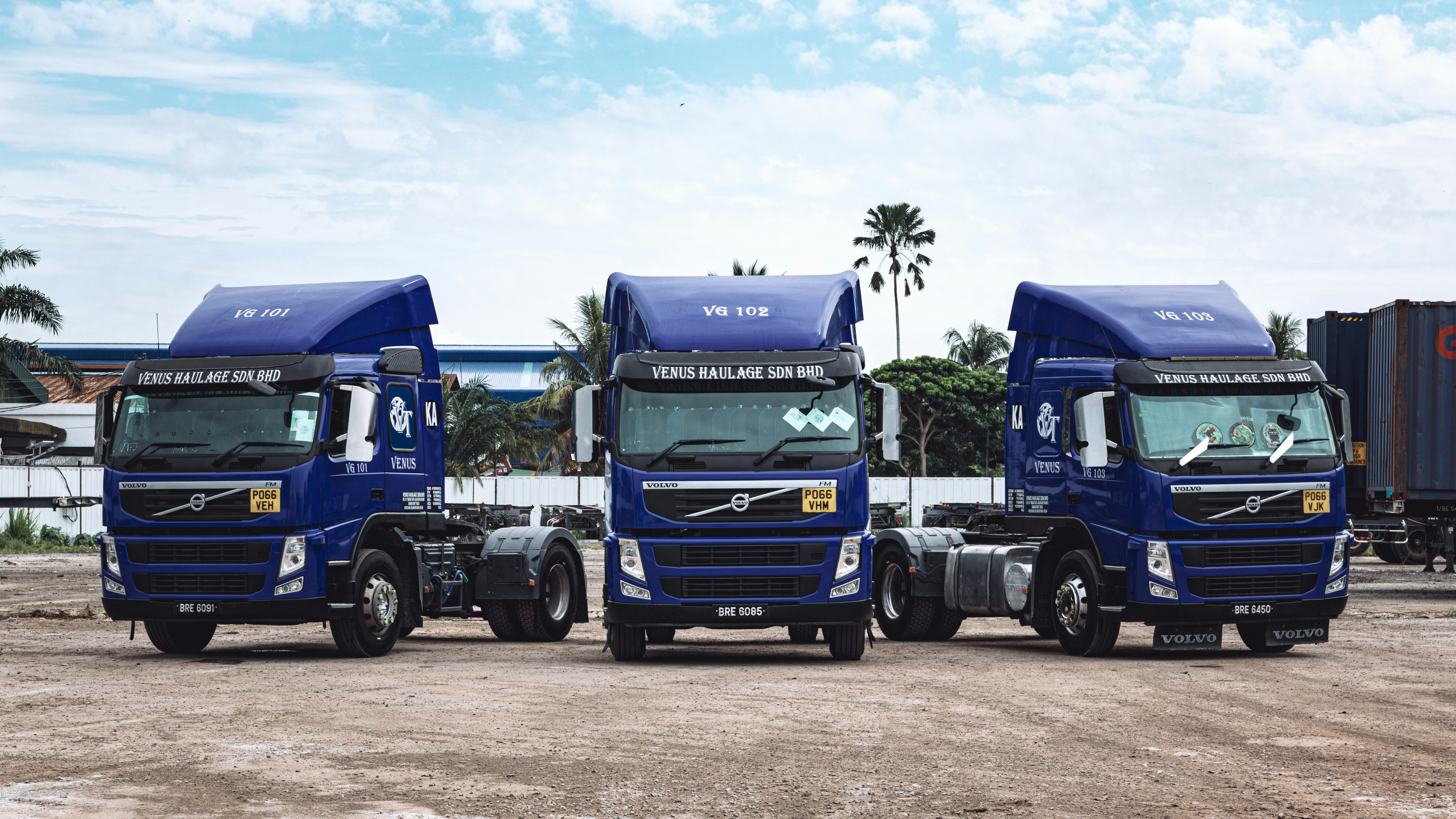

Truck Finance for Start-Up Owner Drivers Australia
Read time: 22 min

Starting your own transport business does not necessarily mean waiting years before you can finance your first truck.
Selected commercial lenders can consider start-up owner-drivers and recently registered ABNs where the overall application supports the purchase.
For a new business, the lender usually has less historical information to rely on.
An established transport company might provide:
- Several years of financial statements
- Tax returns
- BAS
- Existing fleet repayment history
- Long-term business bank statements
A start-up owner-driver may not have those records yet.
Instead, the lender may place more weight on:
- Previous transport experience
- Heavy vehicle driving history
- Current or upcoming work
- Work-source agreements
- Transport contracts
- Recent bank statements
- Personal and business credit history
- Existing financial commitments
- Savings and working capital
- Deposit or trade-in
- The truck being purchased
There is no single minimum ABN age that applies across every lender offering truck finance in Australia. Selected lenders can consider newer ABNs when the broader application makes commercial sense.
The Asset Finance Shop (TAFS) arranges truck finance for Australian owner-drivers, sole traders and transport businesses through access to more than 80 bank and non-bank lenders.
This guide explains how start-up owner-driver truck finance works, which documents can help, what lenders assess and how to prepare a stronger first truck finance application.
Can I Finance a Truck if I Just Started My ABN?
Potentially.
A new ABN does not automatically prevent you from getting truck finance.
Different lenders have different policies around:
- Minimum trading history
- ABN age
- GST registration
- Documentation
- Credit history
- Truck age
- Deposit requirements
Some lenders prefer established businesses.
Others may consider a recently established business where the applicant can demonstrate relevant industry experience, available work and a reasonable plan for servicing the truck finance.
Consider two applicants.
Applicant One
ABN: 6 months
Transport experience: 12 years
Heavy vehicle licence: Current
Work: Confirmed subcontracting
Credit: Strong
Truck: Used rigid suitable for the work
Applicant Two
ABN: 6 months
Transport experience: None
Work: Not confirmed
Savings: Limited
Truck: Expensive prime mover with no clear work source
Both have the same ABN age.
They do not present the same risk to a lender.
For a start-up owner-driver, the experience behind the new business can therefore be just as important as the age of the ABN.
What Is Start-Up Owner-Driver Truck Finance?
Start-up owner-driver truck finance is commercial vehicle finance used by someone establishing their own transport operation.
This might include someone moving from:
- Employed truck driver to owner-driver
- Subcontractor to running their own truck
- Courier driver to rigid truck operator
- Interstate driver to owning a prime mover
- Civil truck driver to tipper owner
- Transport employee to independent contractor
The business may be new.
The operator may not be.
That distinction is important when preparing the finance application.
What Trucks Can Start-Up Owner-Drivers Finance?
Subject to lender criteria, truck finance may be available for a wide range of commercial vehicles.
This can include:
- Prime movers
- Rigid trucks
- Heavy rigid trucks
- Tippers
- Curtain-siders
- Pantechnicons
- Refrigerated trucks
- Crane trucks
- Tilt trays
- Tow trucks
- Tankers
- Concrete trucks
- Waste trucks
- Service trucks
- Courier trucks
- Trailers
- Dollies
Both new and used trucks can potentially be considered.
The truck should make commercial sense for the work the new business intends to perform.
How Much ABN History Do I Need?
There is no universal answer.
Truck lenders do not all use the same minimum ABN requirement.
One lender may prefer businesses that have traded for a year or more.
Another may consider a younger ABN where the application has strengths such as:
- Long industry experience
- Strong credit
- Confirmed work
- Good bank statement conduct
- Available working capital
- Suitable truck
- Deposit
That means the better question is not:
How old does my ABN need to be?
It is:
Which lenders are prepared to consider an owner-driver with my ABN age, experience and truck?
Do I Need Two Years of Trading History?
Not with every lender.
A start-up business obviously cannot produce two years of financial statements if the business only began six months ago.
Selected lenders can assess newer businesses using alternative information.
That can include:
- Previous employment history
- Transport experience
- Current bank statements
- Contracts
- Work-source agreements
- Credit history
- Savings
- Assets and liabilities
The documentation pathway depends on the lender.
Why Previous Transport Experience Matters
Previous industry experience can be one of the strongest parts of a start-up owner-driver application.
A lender wants to understand whether you know how to operate the truck and the business behind it.
Relevant experience can include working as:
- Interstate driver
- Local freight driver
- Courier
- Tipper driver
- Civil haulage operator
- Refrigerated transport driver
- Heavy combination driver
- Subcontractor
- Owner-driver under another entity
- Transport manager
Experience can demonstrate that you understand:
- Fuel costs
- Maintenance
- Driver hours
- Freight rates
- Truck operating costs
- Route requirements
- Customer expectations
- Downtime
- Compliance
A newly registered business run by an experienced operator can present very differently from someone entering transport for the first time.
Does My Heavy Vehicle Licence Help?
It can help demonstrate relevant operating experience.
For example, someone purchasing their first prime mover may have:
- HC or MC licence
- Ten years of linehaul experience
- Previous experience operating similar equipment
That information helps explain why the proposed truck purchase makes commercial sense.
It does not guarantee finance.
But it gives the lender useful context.
What Documents Do Start-Up Owner-Drivers Need?
The exact truck finance documents vary between lenders.
A useful starting point includes:
|
Area |
Information that may help |
|
Identification |
Driver's licence and identification |
|
Business |
ABN, legal entity and business structure |
|
Licensing |
Relevant heavy vehicle licence |
|
Banking |
Recent personal or business bank statements |
|
Experience |
Employment and transport history |
|
Work |
Current or upcoming contracts |
|
Work source |
Subcontractor agreement or work-source letter |
|
Existing debt |
Current loans and finance commitments |
|
Position |
Assets and liabilities |
|
Working capital |
Savings and available cash |
|
Contribution |
Deposit or trade-in where applicable |
|
Truck |
Vehicle type, price and seller |
You will not necessarily need every item.
The selected lender determines the final document requirements.
1. Identification
Truck finance will generally start with confirming who is applying.
For a sole trader this commonly includes:
- Driver's licence
- Personal details
- Residential details
- ABN
Where your licence also demonstrates experience with the class of truck being financed, that can help support the commercial story.
2. ABN and Business Structure
Have your correct business details ready.
This can include:
- ABN
- Business name
- Legal entity
- Trading name
- GST status
- Business commencement date
If the new ABN represents a change in structure rather than a genuinely new business, explain that clearly.
For example:
Previous structure: Sole trader for four years
New structure: Company registered three months ago
is very different from:
Previous business: None
Current ABN: Three months old
The current entity may be new while the underlying transport activity is established.
3. Bank Statements
Bank statements can become particularly important for start-up truck finance.
A lender may use them to understand:
- Current income
- Existing repayments
- Living expenses
- Business expenses
- Savings
- Cash reserves
- Account conduct
If the business is extremely new, there may not be many months of business bank statements available.
Depending on the lender and circumstances, other information may help support the application.
4. Employment and Transport History
Do not assume the lender will automatically know your background.
Explain it.
For example:
2016 to 2022: Employed interstate driver
2022 to 2026: Transport subcontractor
2026: Registered own ABN and moving into owner-driver operation
That tells a very different story from an application that simply states:
ABN registered in 2026.
The lender needs the wider picture.
5. Evidence of Work
For a start-up owner-driver, this can be particularly important.
An established business can show historical income.
A start-up may need to show where future income is expected to come from.
Evidence can potentially include:
- Signed transport contract
- Subcontractor agreement
- Work-source agreement
- Purchase order
- Letter of intent
- Regular customer information
The lender wants to understand what the truck will actually do once purchased.
What Is a Work-Source Agreement?
A work-source agreement can help explain where the truck's work is expected to come from.
For example:
Customer: Logistics company
Work: Metropolitan pallet deliveries
Truck required: 12-pallet rigid
Frequency: Five days per week
Payment: Agreed rate per run
Start: Once truck is available
The lender can then assess whether the proposed truck and finance repayment make sense against the expected work.
Do I Need a Contract Before Applying?
Not in every situation.
However, evidence of available work can strengthen a start-up application.
This is particularly true where:
- ABN is very new
- There is limited business income history
- The truck is expensive
- Finance amount is large
- Business has no existing commercial asset finance
A contract does not guarantee approval.
It gives the lender more information about how the new business expects to generate revenue.
What If I Have Regular Work but No Formal Contract?
Explain the arrangement.
Not every transport operator works under a long formal contract.
The broker can help identify what evidence may be useful.
This might include:
- Letter from work provider
- Work-source agreement
- Previous payment history
- Regular customer information
- Existing subcontracting arrangement
The goal is to make the income source understandable.
6. Existing Debts
Disclose your current finance commitments.
These can include:
- Car loans
- Personal loans
- Credit cards
- Equipment finance
- Existing truck finance
- Business loans
- Mortgage commitments
The lender needs to understand the proposed truck payment alongside what you already owe.
Leaving liabilities out of the initial assessment usually creates problems later when they are identified.
7. Assets and Liabilities
The lender may ask for an overview of your financial position.
Assets might include:
- Cash
- Savings
- Property
- Vehicles
- Existing business equipment
Liabilities might include:
- Mortgage
- Personal loans
- Vehicle finance
- Credit cards
- Business debt
This helps the lender understand the broader position of the applicant.
8. Savings and Working Capital
Buying the truck is only one part of starting an owner-driver business.
You may also need cash for:
- Registration
- Insurance
- Fuel
- Tolls
- Tyres
- Servicing
- Repairs
- Compliance
- Accounting
- Unexpected downtime
A lender may be more comfortable where the business has some working capital remaining after the truck purchase.
Using every dollar as a deposit is not always the strongest commercial decision.
Do Start-Up Owner-Drivers Need a Deposit?
Not always.
Deposit requirements depend on factors including:
- ABN age
- Credit profile
- Experience
- Truck
- Purchase price
- Finance amount
- Work
- Lender
Some eligible applicants may qualify for full purchase-price finance.
Other applications may need a contribution.
Can a Deposit Strengthen the Application?
Potentially.
Consider:
Truck: $140,000
Deposit: $20,000
Finance: $120,000
The deposit reduces the lender's exposure.
It may also demonstrate that the applicant has saved toward the business.
However, the owner-driver still needs enough working capital after settlement.
Can I Use a Trade-In?
Potentially.
If you already own a vehicle or truck with positive equity, that value may contribute toward the purchase.
For example:
Trade-in value: $70,000
Finance payout: $45,000
Potential equity:
$25,000
That equity may reduce the new finance requirement.
9. The Truck Being Purchased
The truck itself forms part of the lender assessment.
The lender may consider:
- Make
- Model
- Year
- Kilometres
- Condition
- Purchase price
- Market value
- Seller
- Intended work
The vehicle should make sense relative to the business.
Choosing a Sensible First Truck
A start-up owner-driver should avoid treating truck selection separately from finance.
The vehicle needs to suit:
- The freight
- Expected routes
- Payload
- Work-source requirements
- Purchase budget
- Expected income
For example, financing a significantly more expensive truck than the work requires can put unnecessary pressure on the business.
A suitable truck at a sensible purchase price can make the application easier to understand.
New vs Used Truck Finance for Start-Ups
Both can potentially be financed.
New Truck
A new truck may offer:
- Long remaining working life
- Manufacturer warranty
- Clear dealer documentation
- Lower immediate maintenance risk
But:
- Purchase price may be higher
- Finance requirement may be larger
Used Truck
A used truck may offer:
- Lower purchase price
- Lower finance requirement
But the lender may consider:
- Age
- Kilometres
- Condition
- Market value
- Expected remaining working life
The cheapest truck is not automatically the easiest truck to finance.
Can Start-Up Owner-Drivers Finance an Older Truck?
Potentially through selected lenders.
Older trucks can reduce lender choice because the asset may be approaching the end of the lender's preferred age range.
The lender may respond by:
- Reducing the finance term
- Limiting the balloon
- Requesting a valuation
- Requesting a deposit
- Declining the vehicle while still being comfortable with the borrower
This means a finance assessment should consider both:
the owner-driver
and:
the truck.
Dealer Truck Finance
Buying through a truck dealership can make settlement relatively straightforward.
The dealer generally provides:
- Invoice
- Truck details
- VIN
- Purchase price
- Business details
The lender still assesses the start-up borrower separately.
A dealer selling the truck does not automatically guarantee finance approval.
Private Sale Truck Finance for Start-Ups
Selected lenders can finance trucks purchased from private sellers.
Additional checks can apply around:
- Seller identity
- Vehicle ownership
- Existing finance
- VIN
- Market value
- Purchase price
A start-up owner-driver buying an older truck privately can therefore require more lender matching than an established business buying a new truck from a dealership.
Auction Truck Finance
Auction purchases can also potentially be financed.
The challenge is timing.
Auction houses may require settlement quickly after the successful bid.
Where possible, start the finance assessment before bidding.
That can help establish:
- Approximate budget
- Deposit position
- Suitable truck age
- Available lender pathways
- Documents required
The final truck still needs to satisfy lender criteria.
Can I Get Pre-Approval Before Finding My First Truck?
Potentially.
An initial assessment can often begin before the exact vehicle has been selected.
TAFS can review:
- ABN
- Experience
- Credit
- Work
- Bank statements
- Existing commitments
- Approximate truck budget
The final lender still needs to approve the specific truck before settlement.
This can be useful for start-up operators because it gives you a clearer price range before shopping.
Does a New ABN Mean I Need Low Doc Truck Finance?
Not necessarily.
These are two different concepts.
New ABN describes the age of the business.
Low doc describes the documentation pathway used by the lender.
A newer business may use low doc because it does not yet have annual financial statements.
But not every new ABN application is automatically classified the same way.
Can a Start-Up Get Low Doc Truck Finance?
Potentially.
A low doc lender may use information such as:
- Bank statements
- ABN details
- Credit history
- Transport experience
- Current work
- Truck details
instead of requiring complete historical financial statements.
The lender is still assessing whether the repayment appears affordable.
Is Low Doc the Same as No Doc?
No.
Low doc does not mean:
- No credit check
- No income assessment
- No documents
- Guaranteed approval
The lender still needs sufficient information to understand the business and proposed truck purchase.
Can I Get Truck Finance With No Business Income Yet?
Potentially, but the application will generally need a clear explanation of how the truck will generate revenue.
Where the new ABN has not yet begun earning meaningful income, information such as:
- Previous experience
- Signed contracts
- Work-source agreement
- Savings
- Deposit
- Credit history
can become particularly important.
The available options will depend heavily on the complete application.
Can a Start-Up Owner-Driver Get 100% Truck Finance?
Potentially through selected lenders.
It is not guaranteed.
The lender may consider:
- Applicant experience
- Credit
- ABN history
- Truck
- Purchase price
- Work
- Financial position
Another applicant may need a deposit.
What Credit History Do Lenders Look At?
A new business does not mean a new personal credit file.
The lender may review the applicant's existing credit history.
This can include:
- Current debts
- Previous defaults
- Repayment conduct
- Recent finance applications
- Existing vehicle loans
Strong previous repayment history can help give the lender additional information where the business itself has limited trading history.
Can I Get Start-Up Truck Finance With Bad Credit?
Potentially through selected lenders.
The lender may want to understand:
- What happened
- When it occurred
- Amount involved
- Whether it has been resolved
- Current repayment conduct
- Available deposit
- Work and income
A new ABN combined with significant credit issues can reduce the number of available lenders, but it should still be assessed on the complete circumstances.
Can I Get Truck Finance With ATO Debt?
Potentially through selected lenders.
If the new business or related entity has tax debt, lenders may look at:
- Amount owing
- Payment arrangement
- Payment conduct
- Current cash flow
- Other liabilities
Disclose the position at the beginning.
What Can Strengthen a Start-Up Truck Finance Application?
A strong application can include:
- Relevant transport experience
- Correct heavy vehicle licence
- Confirmed work
- Work-source agreement
- Good credit
- Clear bank statement conduct
- Reasonable truck purchase
- Savings
- Working capital
- Deposit
- Transparent disclosure of existing debts
The objective is to make the business proposition easy for the lender to understand.
What Can Weaken an Application?
Potential issues include:
- No transport experience
- No confirmed work
- Truck price too high for expected income
- Poor credit conduct
- Frequent bank dishonours
- Multiple recent finance applications
- Undisclosed debts
- No working capital
- Old truck with limited remaining life
- Purchase price above market value
One issue does not automatically mean the application fails.
But several weaknesses together can significantly reduce the available lender options.
Why Lender Matching Matters for Start-Ups
Truck lenders do not all treat start-up owner-drivers the same way.
One lender may require longer trading history.
Another may accept a new ABN but require strong industry experience.
Another may consider the borrower but want a newer truck.
Another may require a deposit.
Another may have a suitable low doc pathway.
This is why applying randomly to several lenders is not necessarily the best approach.
TAFS assesses the business, applicant and truck before matching the application against lender criteria. TAFS has access to more than 80 bank and non-bank lenders.
Should I Apply to Several Banks?
Be careful.
Multiple formal applications can create multiple credit enquiries.
The underlying problem may still remain if the business does not fit those lenders' policies.
A better process is:
- Assess the application
- Understand the credit profile
- Identify lender fit
- Prepare the required documents
- Submit to the selected lender
How TAFS Start-Up Owner-Driver Finance Works
Step 1: Tell Us About Your Background
TAFS reviews:
- Previous transport experience
- Heavy vehicle licence
- Previous employment
- Owner-driver history
- New business
Step 2: Review the ABN
This can include:
- ABN age
- Structure
- GST registration
- Previous entities
Step 3: Understand the Work
Provide information about:
- Contracts
- Freight customers
- Work-source agreements
- Expected routes
- Expected truck use
Step 4: Review the Financial Position
TAFS can assess:
- Bank statements
- Existing debts
- Credit profile
- Assets and liabilities
- Savings
- Working capital
Step 5: Review the Truck
This includes:
- Truck type
- Price
- Age
- Kilometres
- Seller
- Intended use
Step 6: Soft Credit Check
TAFS can begin with a soft credit check before the formal lender submission.
Step 7: Compare Suitable Lenders
The internal credit assessment can then be compared against lender criteria from more than 80 bank and non-bank lenders.
Step 8: Confirm the Documents Needed
Instead of assuming every start-up needs the same paperwork, the documentation pathway can be based on the lender selected.
Step 9: Formal Application
Once an appropriate lender and structure have been selected, one formal application is submitted.
Step 10: Approval and Settlement
TAFS coordinates:
- Lender conditions
- Finance documents
- Truck invoice
- Seller requirements
- Settlement
Start-Up Owner-Driver Document Checklist
Use this as a practical starting point.
Identity
- Driver's licence
- Heavy vehicle licence
Business
- ABN
- Business structure
- Trading name
- GST registration where applicable
Experience
- Previous employment
- Transport experience
- Owner-driver experience
Work
- Transport contract
- Subcontractor agreement
- Work-source agreement
- Letter of intent
- Regular customer information
Banking
- Recent personal or business bank statements
Finance
- Existing debts
- Current repayments
- Credit cards
- Other vehicle finance
Financial Position
- Assets
- Liabilities
- Savings
- Working capital
Contribution
- Deposit
- Trade-in
Truck
Initially:
- Truck type
- Approximate budget
- New or used
Once selected:
- Make
- Model
- Year
- Kilometres
- VIN
- Purchase price
- Seller
Example: Employed Driver Buying First Prime Mover
Consider:
Experience: 11 years interstate driving
ABN: 5 months
Current work: Subcontracting agreement ready
Truck: Used prime mover
Credit: Strong
Savings: Available
The lender may not have years of business financials.
But it can still assess:
- Industry experience
- Work
- Credit
- Savings
- Truck
- Proposed repayment
This is the type of application where lender fit becomes particularly important.
Example: Courier Moving to a Rigid Truck
Consider a courier sole trader currently operating a van.
The business has secured larger freight work requiring a rigid truck.
The owner has:
- Two years courier trading
- New company structure
- Regular customers
- Good bank statements
- Existing vehicle finance
Although the current company ABN is new, the underlying transport activity is established.
That history should be explained as part of the application.
Example: Tipper Owner-Driver Starting in Civil
Consider:
Experience: 8 years employed in civil haulage
New ABN: 4 months
Truck: Used tipper
Work: Subcontracting with earthmoving contractor
The lender can assess more than just four months of ABN history.
The operator's experience and identifiable work source provide important context.
Questions to Ask Before Financing Your First Truck
Before applying, ask:
- Which lenders consider my ABN age?
- Does my previous driving experience help?
- What proof of work should I provide?
- Do I need financial statements?
- Do I need tax returns?
- Do I need BAS?
- What bank statements are required?
- Is a deposit required?
- Can I finance the full truck price?
- Can I use a trade-in?
- Can I buy a used truck?
- Can I buy privately?
- Can I buy at auction?
- What finance term is available?
- Can I include a balloon?
- What will the repayment be?
- What interest rate applies?
- What fees apply?
- What happens if the truck is older?
- What is required before settlement?
Frequently Asked Questions
Can I Finance a Truck if I Just Started My ABN?
Potentially.
Selected lenders can consider recently established businesses where the overall application supports the purchase.
How Old Does My ABN Need to Be?
There is no single minimum ABN age across every Australian truck finance lender.
Do I Need 12 Months of Trading History?
Not with every lender.
Some require longer trading history, while others consider newer businesses.
Do I Need Two Years of Financial Statements?
Not necessarily.
Selected lenders can consider alternative documentation.
What Documents Do I Need for Truck Finance?
Useful documents can include:
- Identification
- ABN
- Bank statements
- Existing debt information
- Transport experience
- Evidence of work
- Assets and liabilities
- Deposit information
- Truck details
Does Previous Truck Driving Experience Help?
Yes.
Previous industry experience can be particularly important where the current business has limited trading history.
Can I Get Finance for My First Truck?
Potentially.
The lender may focus heavily on your experience, available work, financial position and proposed truck.
Can a Sole Trader Get Truck Finance?
Potentially.
Sole traders commonly use commercial truck finance.
Can I Get Start-Up Truck Finance Without Tax Returns?
Potentially through selected lenders.
Alternative documentation may be available.
Can I Get Low Doc Truck Finance?
Potentially.
Low doc lenders may use bank statements and other supporting information rather than complete financial statements.
Do I Need a Contract?
Not necessarily in every case.
However, evidence of upcoming work can strengthen a start-up application.
Do I Need a Deposit?
Not always.
Deposit requirements depend on the overall application.
Can I Get 100% Truck Finance?
Potentially for eligible applicants.
Can I Buy a Used Truck?
Potentially.
Truck age, kilometres and value can affect lender options.
Can I Buy a Truck Privately?
Potentially through selected lenders.
Additional seller and asset checks may apply.
Can I Buy at Auction?
Potentially.
An initial finance assessment before bidding can be useful.
Can I Get Finance Before I Find the Truck?
Potentially.
An initial assessment can begin before the exact vehicle is selected.
Can I Get Finance With Bad Credit?
Potentially through selected lenders.
The broader application needs to be assessed.
Can I Get Finance With ATO Debt?
Potentially through selected lenders.
Is a New ABN Automatically More Expensive?
Not automatically.
The available rate depends on the lender, credit profile, truck, finance amount, documentation and complete transaction.
How Many Lenders Can TAFS Compare?
TAFS has access to more than 80 bank and non-bank lenders.
Finance Your First Truck With TAFS
Starting an owner-driver business does not automatically mean waiting years before applying for commercial truck finance.
For a new ABN, the lender may simply need a different way to understand the business.
That can include:
- Previous transport experience
- Heavy vehicle licence
- Current work
- Work-source agreements
- Bank statements
- Credit history
- Savings
- Working capital
- Deposit or trade-in
- A sensible truck purchase
The strongest start-up applications make one thing clear:
how the operator's previous experience turns into a viable transport business once the truck is purchased.
TAFS can review the business, complete an initial credit assessment and compare suitable truck finance in Australia through access to more than 80 bank and non-bank lenders.
The Asset Finance Shop (TAFS) is a commercial asset finance brokerage based in Sydney. Information on this page is general in nature and doesn’t take your personal circumstances into account. Speak to a TAFS broker for options tailored to your business, and to your accountant regarding tax treatment.