
Trusted by 3000+ clients

Low Loader Finance

Finance your next low loader with a team that understands heavy equipment transport.

Buying your first low loader, replacing an older trailer or adding more machinery transport capacity to the fleet, we'll build the finance around your business, the trailer and the work it needs to perform.

TAFS works with transport, civil, construction, earthmoving and equipment businesses across Australia, with access to more than 80 lenders for new and used low loader finance.

Low Loader Finance

Low loader finance for Australian businesses

Low loader finance is commercial asset finance used to purchase low loader trailers for business purposes.

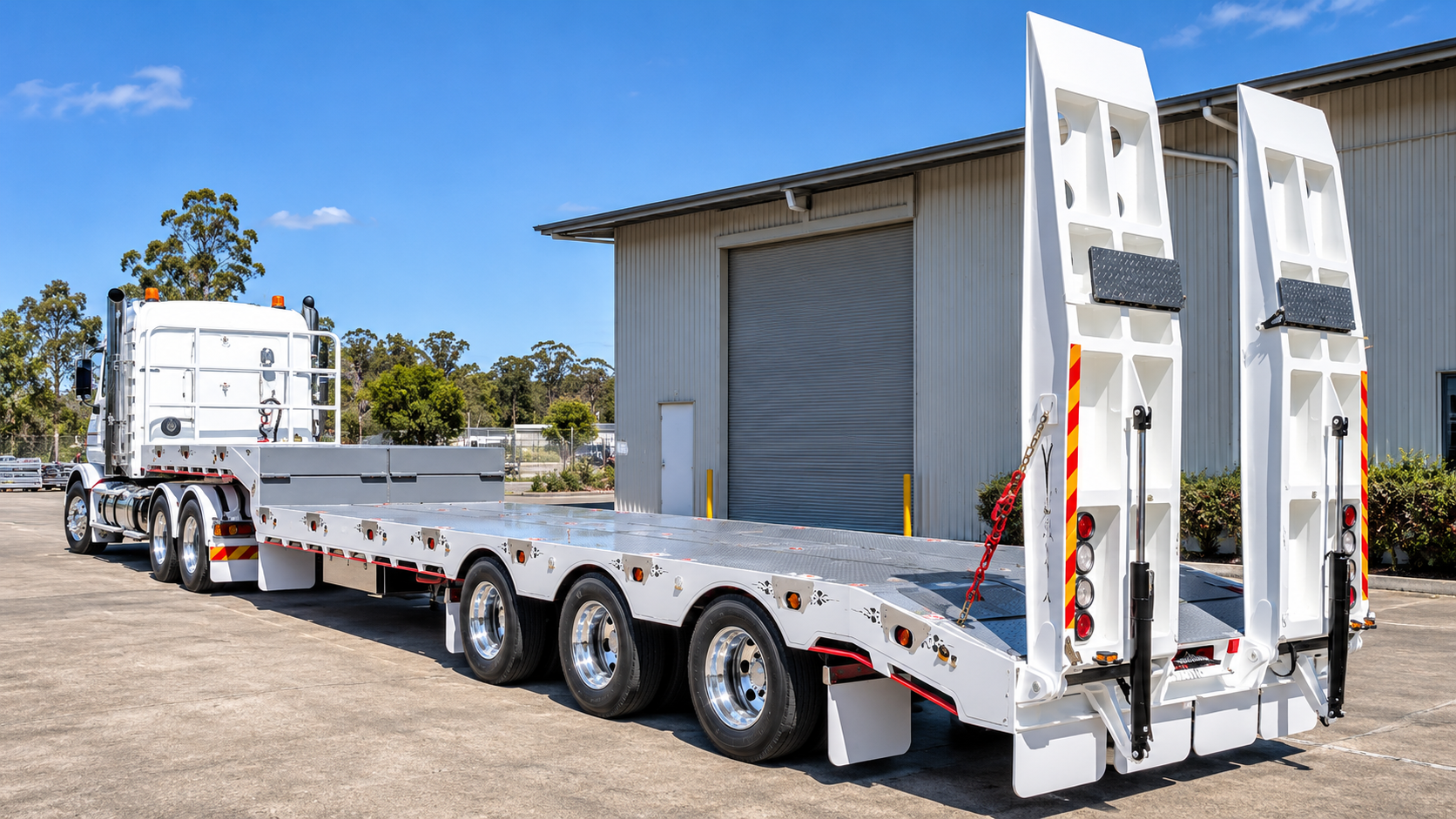
These trailers are commonly used to transport heavy machinery, earthmoving equipment, agricultural machinery and other large commercial assets where a lower deck height is required.

Finance can be arranged for new or used low loaders purchased through manufacturers, dealers, private sellers and auctions.

The options available will depend on the business, trailer, age, configuration, condition, purchase price and overall application.

TAFS reviews those factors before approaching lenders so the finance can be matched with the asset and the business. See the full range of commercial trailer finance options.

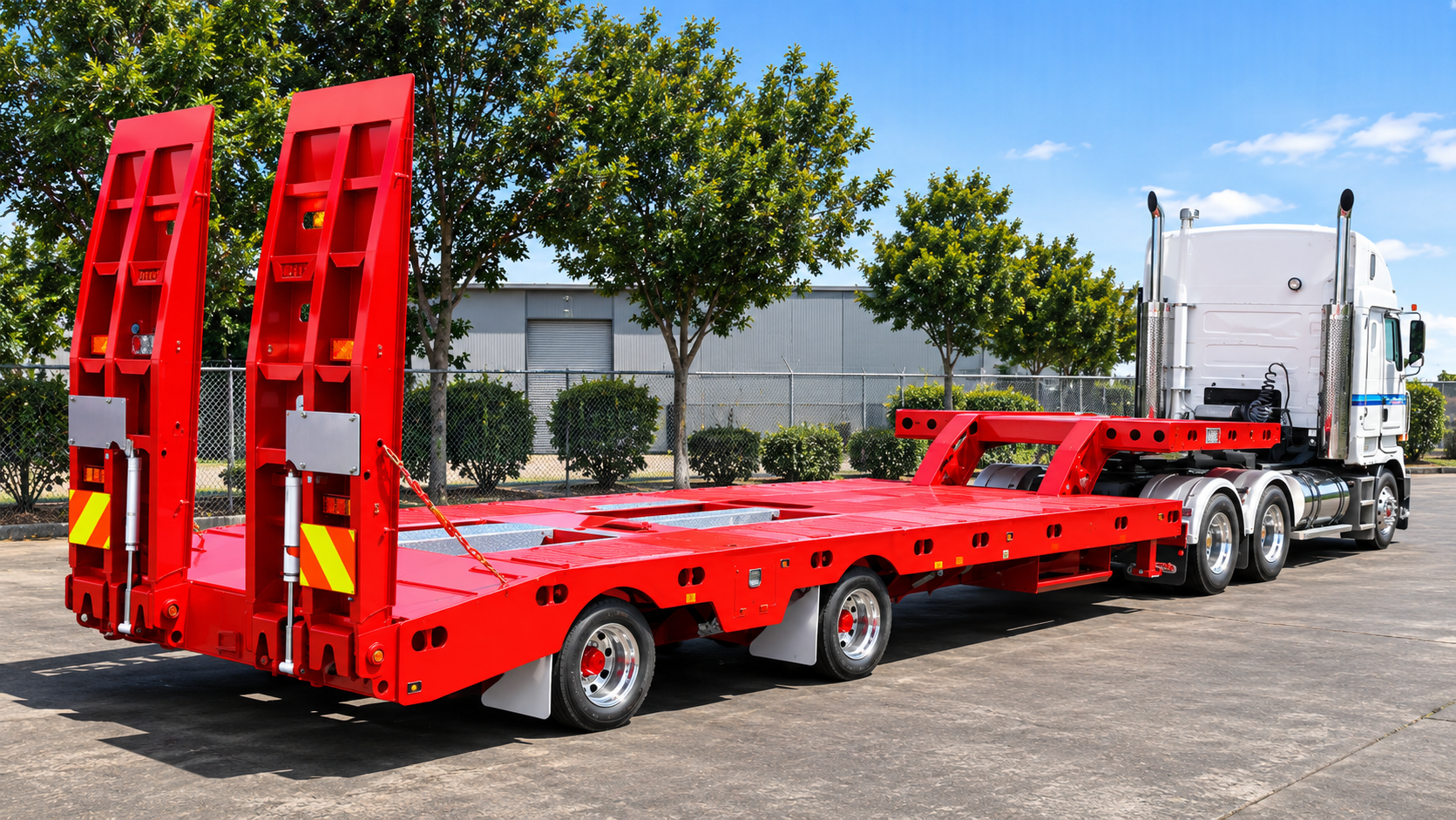
Red heavy-duty trailer behind a white semi truck

Low loaders are specialised working assets

Low loaders are designed around moving equipment that may be too heavy, tall or difficult to load onto a standard trailer.

That can make the finance assessment different from a general freight trailer.

The business behind the purchase also matters. A civil contractor buying a low loader to move its own excavators presents differently from a transport operator purchasing one to provide machinery haulage services for customers.

TAFS reviews both the asset and the commercial reason for the purchase.

Lenders can consider factors such as:

  • Trailer age
  • Manufacturer
  • Axle configuration
  • Deck configuration
  • Condition
  • Purchase price
  • Intended use
  • Expected working life

What low loaders can be financed?

TAFS can assess finance for a range of low loader trailers. This can include:

  • Tri-axle low loaders
  • Quad-axle low loaders
  • Machinery transport low loaders
  • Heavy equipment trailers
  • Low loaders with ramps
  • Hydraulic low loaders
  • Widening low loaders
  • Extendable low loaders
  • Low loaders with removable ramps
  • New low loaders
  • Used low loaders

Where the trailer has specialised features or modifications, providing the full specifications helps the lender understand exactly what is being financed.

  • 15,000+Assets Financed And Businesses Helped
  • $350M+Total Business Funding
  • 80+Lenders To Compare
  • 30+Years Of Business Experience
  • 93%Client Success Rate

What are low loaders used to transport?

Low loaders can be used to transport a wide range of machinery and equipment.

The trailer needs to be suitable for the size, weight and loading requirements of the equipment being moved.

The type of machinery being transported can also help explain the commercial purpose of the finance application.

This can include:

  • Excavators
  • Bulldozers
  • Wheel loaders
  • Skid steers
  • Rollers
  • Graders
  • Telehandlers
  • Agricultural machinery
  • Mining equipment
  • Construction equipment
  • Other heavy commercial machinery

Buying your first low loader?

Purchasing a first low loader can be a major step for a transport operator or contractor.

You may already own the truck and machinery but currently rely on hired transport when equipment needs to move between sites.

Owning a low loader can give the business more control over site mobilisation, equipment scheduling, transport costs, availability, customer jobs and machinery movements between projects.

Lenders may consider industry experience, existing truck and machinery ownership, ABN history, current work, credit profile, trailer purchase price and any deposit or trade-in.

TAFS reviews the complete application rather than focusing only on previous trailer ownership.
Adding another low loader to the fleet

An additional low loader can increase machinery transport capacity or allow different trailers to be allocated to different types of equipment.

Businesses may add another unit because of increased project demand, new contracts, fleet growth, larger machinery, existing trailer utilisation or replacement planning.

The lender can assess the new finance alongside existing truck, trailer and equipment commitments.

TAFS reviews how the additional asset fits into the wider operation.

Low loader finance for civil and earthmoving businesses

Low loaders are not only purchased by transport companies.

Civil contractors and earthmoving businesses may use their own trailer to move machinery between worksites. That can reduce reliance on external transport providers and give the business more control over equipment scheduling.

A lender may look at the existing machinery fleet, prime mover or truck, current contracts, project pipeline, trading history and existing equipment finance.

The low loader can be assessed as part of the wider asset base used by the business.

Low loader finance for machinery transport operators

Transport operators may purchase a low loader specifically to provide machinery haulage services.

In these applications, lenders can look at the existing fleet, transport experience, customer base, current contracts, type of machinery being transported, trailer specifications and existing finance commitments.

Adding a low loader can give a transport business access to different work from general freight or palletised transport.

Low loader finance for owner-operators

An owner-operator may purchase a low loader to expand from general transport into machinery haulage.

The lender can consider prime mover ownership, transport experience, existing customers, current work, ABN history, trailer specification and purchase price.

If the asset allows the business to take on additional work, that commercial rationale can form part of the application.

Low loader finance for established fleets

Larger transport, civil and earthmoving businesses may use several low loaders across different jobs.

A fleet purchase may involve replacement trailers, additional capacity, different axle configurations, different machinery classes or new project requirements.

TAFS can review single or multiple low loader purchases as part of a broader commercial asset finance requirement.

New and used low loader finance

TAFS can arrange finance for both new and used low loaders, subject to lender requirements.

New low loaders

A new trailer generally provides clear information around the manufacturer, build specifications, axle configuration, deck dimensions, ramp setup, purchase price and expected working life.

New trailers can also be built around the machinery the business expects to transport.

Used low loaders

Used low loaders can vary considerably.

Lenders can consider age, condition, structural integrity, deck condition, axles and suspension, ramps, hydraulic systems where fitted, purchase price and expected remaining working life.

Older trailers can still be financeable, but lender selection can become more important.

Deck height, payload and machinery weight

Deck height matters

Low deck height is one of the defining features of a low loader. Keeping the machinery lower can help when transporting taller equipment.

Before buying a low loader, businesses should consider deck height, main deck length, overall trailer dimensions, machinery height, loading method and prime mover configuration.

The trailer needs to suit both the equipment and the work being performed. Clear specifications also help lenders understand the commercial asset being financed.

Payload and machinery weight

Low loaders can carry substantial equipment, but the correct trailer configuration depends on the machinery being transported.

Businesses should understand machinery weight, trailer tare, axle configuration, load distribution, deck capacity and prime mover suitability.

A trailer used to carry compact machinery presents differently from one built for larger excavators or heavy earthmoving equipment.

Finance approval does not replace the operator's responsibility to make sure the truck, trailer and load combination is suitable and compliant.

Axle configuration and ramps

Axle configuration

Low loaders can be built with different axle configurations depending on the work they are designed to perform. The number and setup of axles can affect trailer capacity, load distribution, asset value and intended use.

When applying for finance, useful specifications can include the number of axles, suspension type, trailer dimensions, manufacturer, build year, deck configuration and rated capacities.

Specialised configurations should be clearly shown in the quote or purchase documentation.

Low loaders with ramps

Ramps are an important part of many low loader configurations. They allow machinery to be driven or loaded onto the trailer.

Depending on the asset, ramps may be hydraulic, mechanical, fold-over, removable or fixed.

For used low loaders, buyers may want to inspect ramp condition, hinges, hydraulic components, structural condition and attachment points.

Where the ramps form part of the trailer, they should be included in the asset description and purchase documentation.

Hydraulic and specialised low loaders

Hydraulic low loaders

Some low loaders use hydraulic systems to assist with loading, ramp operation or trailer configuration.

Where hydraulic equipment forms a significant part of the asset, lenders may require clear information about the complete trailer.

For a used unit, buyers may also want to consider hydraulic condition, rams and cylinders, hoses, pumps, signs of leaks and maintenance history.

The trailer should be assessed as a complete working asset rather than only by its chassis age.

Widening and extendable low loaders

Some low loaders are designed to accommodate machinery that requires additional deck width or length.

These specialised trailers may include widening decks, extendable sections, outriggers and additional load restraint equipment.

Because these configurations can affect the trailer's value and intended use, providing detailed specifications can be useful when the finance application is assessed.

TAFS can review specialised trailers across the lender panel.

Choosing between trailer types

Low loader versus drop deck trailer

Low loaders and drop decks can both be used to transport machinery, but their typical use is different.

A drop deck retains more general freight flexibility while providing a lower main deck than a standard flat top. A low loader is generally a more specialised machinery transport asset designed around lower deck height and heavier or taller equipment.

A drop deck may suit businesses moving a mixture of freight and machinery. A low loader may be more appropriate where heavy equipment transport is the main job.

Low loader versus flat top trailer

A flat top is generally designed around open-deck versatility. It can suit freight, materials and equipment where the load does not require a particularly low deck.

A low loader is more specialised around machinery transport and lower overall load height.

If your business primarily carries general freight, a flat top may offer more flexibility. If you regularly move heavy earthmoving machinery, a low loader may be better suited to the work.

Financing the trailer with or without the truck

You don't need to purchase a truck at the same time to finance a low loader.

Financing a low loader separately

If your business already owns or finances a suitable prime mover, the low loader may be financed separately.

The lender may still consider the existing truck, machinery and equipment finance commitments as part of the application.

TAFS can review the new trailer alongside your current fleet.

Financing a prime mover and low loader together

If you're purchasing both the prime mover and low loader, the assets may potentially be financed together or through separate facilities.

The appropriate structure can depend on the age of each asset, purchase price, supplier, business profile, existing commitments and lender policy.

TAFS can review the complete transaction before determining which approach may be suitable.

Financing a low loader and machinery purchase

In some cases, a business may be purchasing machinery and the trailer required to transport it at around the same time. For example, a contractor may buy an excavator and low loader as part of a fleet expansion.

These are separate commercial assets, and the finance may be structured together or separately depending on suppliers, asset values, business profile and lender requirements.

TAFS can review the overall asset purchase rather than looking at each transaction in isolation.

Dealer, manufacturer and custom builds

Dealer and manufacturer purchases

Low loaders can be purchased through commercial trailer dealers or directly from manufacturers.

New purchases may involve standard builds, custom configurations, deposits, progress payments, build lead times and final delivery payments.

Where a low loader is custom-built, the lender may need to understand the payment schedule before the build begins.

Speak with TAFS before committing to significant progress payments so the finance structure can be reviewed.

Custom-built low loader finance

Many low loaders are built around specific machinery or haulage requirements.

Custom features can include different deck lengths, additional axles, hydraulic ramps, widening decks, extendable sections, toolboxes, winches and load restraint equipment.

The lender may require the manufacturer quote, build specifications, deposit details, progress payment schedule and expected completion date.

TAFS can review the complete build and identify suitable finance options.

Private sale and auction purchases

Private sale low loader finance

Used low loaders are often purchased directly from other transport or civil businesses. TAFS can arrange finance for private-sale low loaders, subject to lender requirements.

Additional checks may include seller identity, ownership, trailer identification, registration, existing finance, PPSR information, purchase price and settlement instructions.

For older specialised trailers, lenders may also require clearer information about condition and value.

Auction low loader finance

Low loaders are regularly sold through truck, transport, machinery and equipment auctions. Auction purchases can move quickly, particularly where payment is required shortly after the winning bid.

If you're planning to buy a low loader at auction, it can help to discuss finance before bidding. Depending on the application, your finance position may be reviewed beforehand.

The final asset and purchase price still need to satisfy lender requirements.

What lenders look at

There is no single checklist every lender uses when assessing low loader finance. Depending on the application, they can consider the following.

Your business

Trading history, turnover, cash flow and existing commitments can influence the finance options available.

Industry experience

Experience across transport, earthmoving, civil or machinery operations can support the commercial purpose of the purchase.

The low loader

Age, manufacturer, configuration, condition and purchase price can affect lender appetite.

Machinery being transported

The lender may want to understand why the trailer is required and how it will be used.

Prime mover

Where relevant, the lender may consider the truck that will operate with the trailer.

Existing asset finance

Current truck, trailer and machinery repayments form part of the wider application.

Credit profile

Personal and business credit history can influence lender selection.

Deposit or trade-in

A deposit is not required in every transaction, although a contribution may strengthen some applications.

Recent TAFS deal

A recent TAFS low loader deal

TAFS helped finance a 2011 RES quad-axle low loader valued at $143,000.

Low loaders are specialised commercial trailers designed to move heavy machinery and equipment where deck height, axle configuration and load capacity all matter.

Because this was an older, higher-value specialised trailer, lender selection was an important part of the transaction.

TAFS reviewed the asset and matched the purchase with a lender suited to the trailer's age, value and commercial purpose.

The $143,000 RES quad-axle low loader was successfully settled, giving the client a purpose-built asset for machinery transport.

Deals like this show why low loader finance is different from standard trailer finance. The trailer's configuration, expected working life and the machinery it will be used to move can all influence how a lender assesses the purchase.

  • 2011 RES quad-axle low loader
  • $143,000 purchase
  • Machinery transport
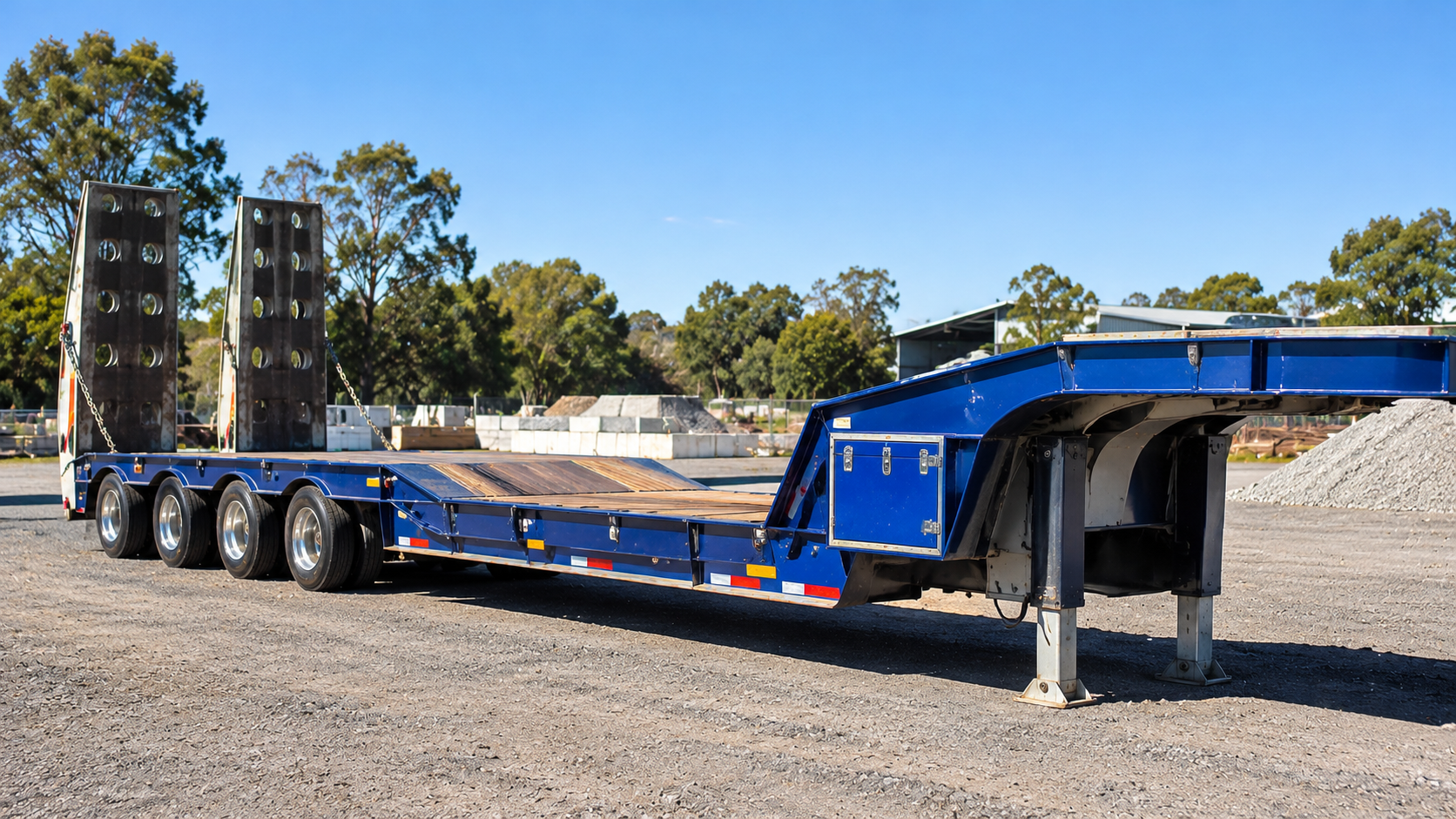
Blue low loader trailer in an industrial yard
Why TAFS

Why businesses use TAFS for low loader finance

80+ Lenders

We have access to a broad panel of banks and specialist commercial lenders with different approaches to trailer age, value and specialised commercial assets.

Internal credit team

Applications are reviewed before they're submitted so the lender receives a clear picture of the business, trailer and commercial reason for the purchase.

93% Client success rate

We focus on matching applications with lenders suited to the transaction and presenting them properly from the beginning.

Commercial asset finance specialists

Our team works with businesses purchasing trucks, trailers, earthmoving machinery and commercial equipment every day. We understand that a low loader is more than a standard trailer. Its configuration, load capability and intended machinery transport role can all matter to the transaction.

Trusted lender partners:

Azora Banjo Bizcap Branded Financial Capify CFI Finance Dynamoney Finance One Grenke Judo Bank Lumi MoneyMe
The TAFS Process

How low loader finance works with TAFS

  • Step 1

    Tell us about the low loader

    Send us the trailer details, purchase price, supplier information and some background on your business. Let us know what machinery or equipment the trailer will be used to transport.

  • Step 2

    We review the application

    Our team looks at the trailer, business profile, existing fleet and finance requirements.

  • Step 3

    We compare suitable lenders

    We assess the application across our lender panel and identify options suited to the asset and transaction.

  • Step 4

    We manage approval and settlement

    Once you've selected an option, we work through the lender requirements, documentation and settlement.

FAQ

Low Loader Finance FAQs

We don't just send applications out. We structure them properly from the start.

  • Can I finance a low loader?

    Yes. TAFS can arrange finance for new and used low loaders used for commercial purposes, subject to lender requirements.

  • Can I finance a used low loader?

    Yes. The lender can consider the trailer's age, condition, configuration, purchase price and expected remaining working life.

    Used Trailer Finance →
  • How old can a low loader be and still get finance?

    There is no single maximum age across every lender. Older low loaders may still be financeable where the asset and overall application meet lender requirements. Age can influence lender selection and finance term.

  • Can I finance a hydraulic low loader?

    Potentially. Where hydraulic systems form part of the completed trailer, the lender can assess the asset as a whole. Clear specifications may be required.

  • Can I finance a widening or extendable low loader?

    Potentially. Specialised low loaders can be considered subject to lender requirements. Providing full build and configuration details can help with the assessment.

  • Can I finance a low loader without buying a prime mover?

    Yes. Where you already own or finance a suitable truck, the low loader may be financed as a separate commercial asset.

  • Can I finance a prime mover and low loader together?

    Potentially. The truck and trailer may be financed together or separately depending on the assets, transaction and lender.

    Prime Mover Finance →
  • Can I finance a low loader and excavator together?

    Potentially. Where several commercial assets are being purchased, TAFS can review the overall transaction and determine whether they should be financed together or separately.

  • Do I need a deposit?

    Not always. Some applications may qualify for full purchase-price finance, while others can benefit from a deposit or trade-in.

  • Can I finance a custom-built low loader?

    Potentially. The lender may require the manufacturer quote, specifications, deposit details, progress payment schedule and completion date.

  • Can I finance a low loader bought privately?

    Potentially. Private-sale finance may require additional seller, ownership and asset checks.

    Private Sale Trailer Finance →
  • Can I finance a low loader at auction?

    Potentially. Speak with TAFS before bidding so your likely finance position can be reviewed. The final low loader still needs to meet lender requirements.

    Auction Trailer Finance →
  • Can I finance a low loader with a new ABN?

    Potentially. Industry experience, expected work, credit profile, deposit and the asset being purchased can influence the options available.

    New ABN Trailer Finance →
  • Can a sole trader finance a low loader?

    Yes. Sole traders can apply for commercial trailer finance where the asset is predominantly being purchased for business purposes and lender requirements are met.

    Sole Trader Trailer Finance →
  • Is low doc low loader finance available?

    Potentially. Low doc options may be available for eligible businesses depending on ABN history, GST registration, credit profile, asset value and lender requirements.

    Low Doc Trailer Finance →
  • Can I finance a low loader with bad credit?

    Potentially. The lender will assess the credit issue alongside the business and specialised asset. Available options can be more limited where the trailer is also older or unusual.

    Bad Credit Trailer Finance →
  • How long can I finance a low loader for?

    Finance terms depend on the business, asset and lender. For used low loaders, age and expected remaining working life can influence the available term.

  • How quickly can low loader finance be approved?

    Straightforward applications can move quickly once the required information is available. Custom-built, private-sale, older or highly specialised low loaders may require additional documentation before approval and settlement.

Ready to finance your next low loader?

Tell us what trailer you're buying, what machinery you'll be carrying and how the asset fits into your business.

We'll review the low loader, structure the application and compare suitable finance options across our lender panel.