Trusted by 3000+ clients

New Trailer Finance

Finance a new commercial trailer built for the work your business needs to do.

Whether you're ordering your first trailer, replacing an older unit or expanding the fleet, TAFS can help structure the finance around the trailer, supplier and your business.

We work with Australian businesses purchasing new trailers from manufacturers and dealers, with access to more than 80 lenders.

New Trailer Finance

New trailer finance for Australian businesses

New trailer finance is commercial asset finance used to purchase brand-new trailers for business purposes.

That can include trailers already available through a dealer as well as factory-built trailers ordered directly from a manufacturer.

The available finance will depend on the business, trailer, purchase price and overall transaction.

TAFS reviews the application before approaching lenders so the finance can be matched with both the asset and the business. See the full range of commercial trailer finance options.

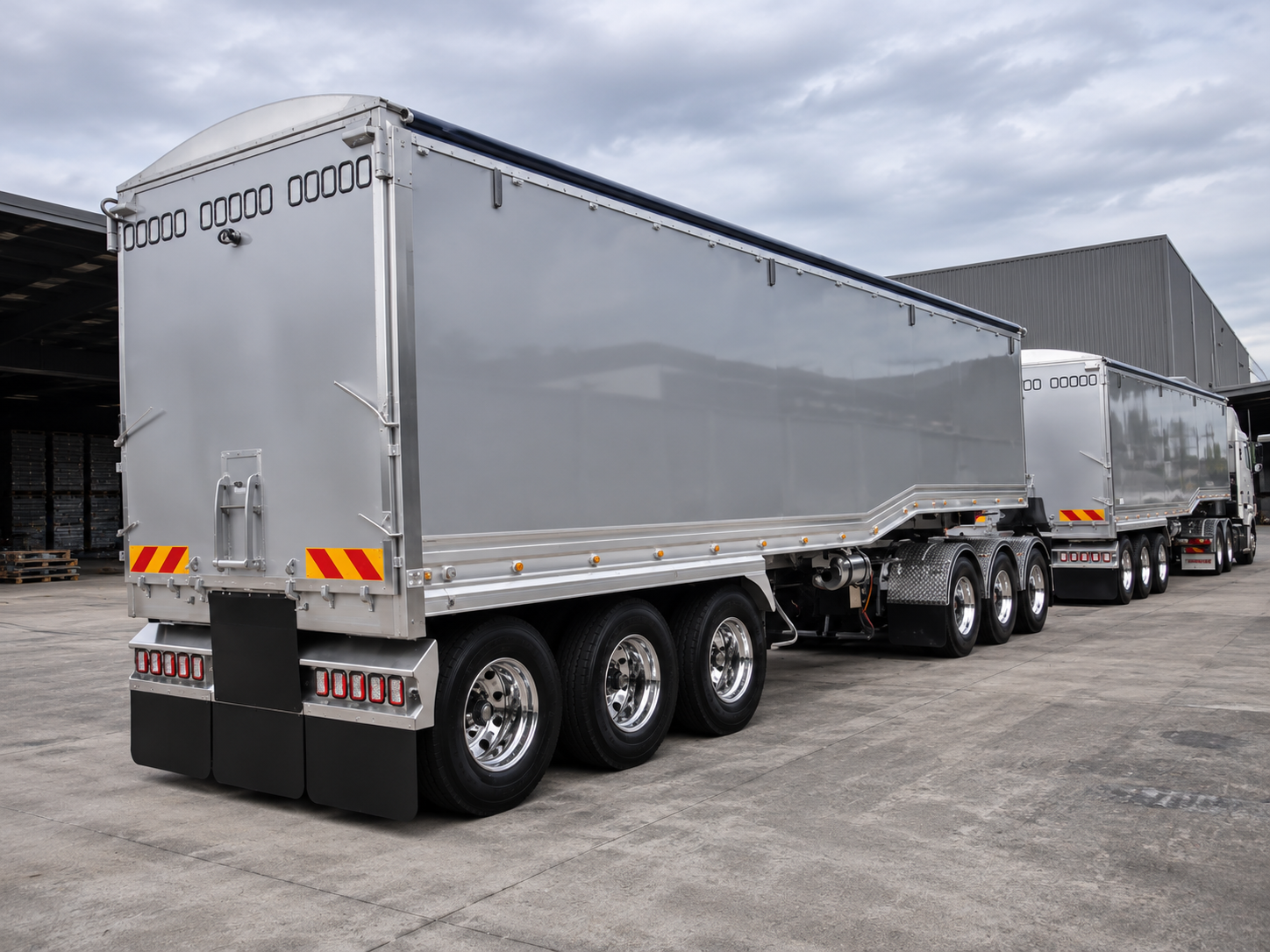
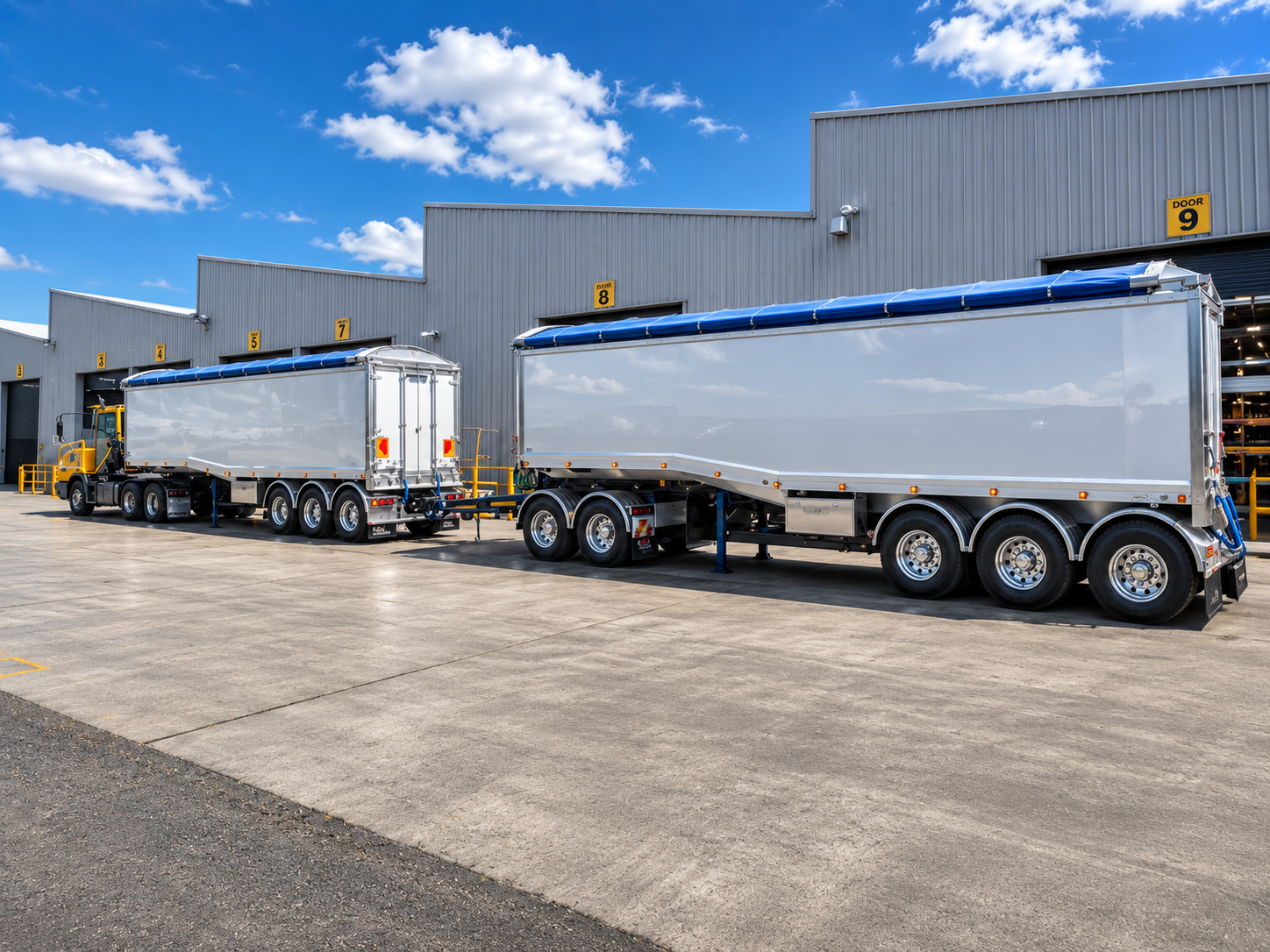
Polished silver trailers at warehouse loading bays

Why businesses buy new trailers

Businesses choose new trailers for different reasons.

For some businesses, buying new is also about getting a trailer that is difficult to find on the used market.

That can be particularly relevant for specialised trailers, custom dimensions or specific body configurations.

A new trailer can provide:

  • A specification matched to the job
  • A longer expected working life
  • Manufacturer warranty
  • Reduced immediate maintenance
  • Newer safety and operating equipment
  • Consistent fleet specifications
  • Greater reliability for contract work

What new trailers can be financed?

Businesses may use finance to purchase:

  • Semi trailers
  • Flat top trailers
  • Drop deck trailers
  • Low loaders
  • Tipper trailers
  • Side tippers
  • Dog trailers
  • Refrigerated trailers
  • Tanker trailers
  • Other specialised commercial trailers
  • 15,000+Assets Financed And Businesses Helped
  • $350M+Total Business Funding
  • 80+Lenders To Compare
  • 30+Years Of Business Experience
  • 93%Client Success Rate

Buying from a manufacturer or a dealer

Buying from a trailer manufacturer

Many commercial trailers are purchased directly from the manufacturer. This can be different from buying an asset already sitting in dealer stock.

The transaction may involve a build quote, final specifications, a deposit, progress payments, a build period, a completion date, the final invoice and delivery.

The trailer may not physically exist when the finance application begins. TAFS can review the proposed purchase and payment schedule before construction is complete.
Buying a new trailer from a dealer

Not every new trailer is factory ordered. Commercial trailer dealers may have completed units available for immediate sale.

These transactions can be more straightforward because the asset already exists and the dealer can generally provide the final invoice, trailer details, manufacturer, build year, purchase price and identification details.

TAFS can review the business and trailer before arranging settlement with the dealer.

Factory-order and custom-built trailers

Factory-order trailer finance

A factory order gives businesses more control over the final trailer specification.

You may be able to choose features such as trailer dimensions, axle setup, suspension, body configuration, deck type, ramps, toolboxes, hydraulic systems, load restraint equipment, refrigeration equipment and tank configuration.

The more customised the trailer, the more important it becomes to provide the lender with clear specifications and supplier documentation.

Custom-built trailer finance

Commercial trailers are often built around a specific job. A custom-built trailer may be required because the business needs particular dimensions, additional payload capacity, a different axle configuration, heavy-duty construction, specialised loading equipment, refrigeration, tank equipment, hydraulic tipping systems, ramps or machinery access, or specific load restraint equipment.

The lender may need to understand what the completed asset will look like before approving the final transaction.

Useful documents can include the manufacturer quote, build specification, purchase contract, deposit invoice, progress payment schedule and expected completion date.

Deposits, progress payments and build timing

Financing trailer deposits

Manufacturers may require a deposit before starting construction. Whether that deposit can form part of the finance arrangement will depend on the transaction and lender.

In many cases, the business may initially pay the deposit and finance the remaining balance when the trailer is completed. Other structures may be possible depending on the lender and build.

Speak with TAFS before paying a large deposit if you want the full transaction reviewed.

Progress payments during the trailer build

Some trailer builds require several payments before the final asset is delivered. For example, the supplier may request payments at order, when fabrication begins, at a construction milestone and before delivery.

Standard asset finance is often designed around a completed asset. That means progress-payment arrangements can require more planning than purchasing a trailer that is already finished.

TAFS can review the supplier's payment schedule and determine what finance options may be suitable.

Finance before the trailer is completed

It can be useful to discuss finance before the trailer is finished.

Doing this early gives the business time to understand likely lender options, the information required, the deposit position, the proposed finance amount, whether progress payments create any issues and what documents will be needed at completion.

Final approval and settlement can still depend on the completed trailer and lender requirements.

Trailer build lead times

A new trailer can have a significant build lead time, particularly where the specification is specialised. That means the business may apply for finance well before delivery.

If the build period is long, lender approval may need to be reviewed or refreshed closer to completion. Changes to the purchase price, business circumstances, trailer specification or delivery date can also affect the final transaction.

Keeping TAFS updated throughout the build can help minimise delays at settlement.

Price changes and fitted equipment

What if the final trailer price changes?

The final purchase price may differ from the original quote if the business changes the specification during construction.

For example, you may add toolboxes, ramps, hydraulic equipment, extra axles, refrigeration equipment, load restraint systems or other accessories.

If the total purchase price increases, the finance approval may also need to be updated. Send any revised quotes or invoices through early so the finance amount can be reviewed.

Financing trailer accessories and fitted equipment

Equipment permanently fitted to a new trailer may potentially be included as part of the overall purchase.

This can include items such as toolboxes, ramps, hydraulic systems, winches, load restraint equipment, refrigeration units, pumps, tanks, hose reels and tail lifts.

Whether individual components can be included will depend on how the transaction is structured and lender requirements. Clear supplier invoices make the completed asset easier to assess.

Fleet growth, replacements and trade-ins

Financing multiple new trailers

Businesses may purchase several trailers at once as part of fleet expansion, replacement programs, new customer contracts, fleet standardisation or increased transport capacity.

The lender can assess the full purchase rather than each trailer as an unrelated transaction. Relevant factors can include the total purchase value, existing fleet, existing finance commitments, business cash flow, reason for expansion and expected utilisation.

TAFS can review single or multi-trailer purchases across our lender panel.

Replacing older trailers with new units

A business may purchase a new trailer to replace an ageing asset. Reasons can include increasing maintenance costs, downtime, structural wear, customer requirements, changing freight, the need for a different configuration or fleet standardisation.

Where the old trailer still has finance owing, the payout and expected trade-in or sale value may need to be considered.

TAFS can review the replacement transaction as a whole.

Trading in an existing trailer

A trade-in can reduce the amount that needs to be financed. The dealer may apply the trade-in value against the new trailer purchase.

Where finance remains on the existing trailer, the current payout needs to be compared with the trade-in value.

TAFS can help account for the existing payout, trade-in value, new trailer price, deposit and final finance amount.

New trailer finance without a trade-in

You don't need to be replacing another trailer to buy new. Businesses may purchase a new trailer as additional capacity.

The lender may want to understand why the business needs another asset. That can include new contracts, higher freight volume, a new type of work, reduced trailer hire, business expansion or fleet redundancy.

The commercial reason behind the purchase can form part of the application.

Financing the trailer with or without the truck

Financing a new trailer separately from the prime mover

You don't need to purchase a truck at the same time. If the business already owns or finances a suitable prime mover, the new trailer may be financed as a separate asset.

The lender may still consider existing truck and trailer commitments when assessing the application.

TAFS can review the purchase alongside the wider fleet position.

Financing a new prime mover and trailer together

If you're purchasing both a new prime mover and trailer, the transaction may potentially be structured together or through separate facilities.

The appropriate approach can depend on asset values, suppliers, delivery dates, finance terms, business profile and lender criteria. The prime mover may also arrive at a different time from the trailer.

TAFS can review the complete purchase and structure the finance around the transaction.

New trailer finance by trailer type

New semi trailer finance

New semi trailers can be purchased from manufacturers or dealers for a wide range of transport applications.

The finance application can include the trailer specification, supplier quote and intended commercial use.

New flat top and drop deck trailer finance

Flat tops and drop decks can be factory ordered around specific freight requirements.

Businesses may choose deck dimensions, axle configuration, toolboxes, load restraint equipment, ramps and extendable sections.

New low loader finance

New low loaders are often highly customised around the machinery being transported. The build may include hydraulic ramps, additional axles, widening decks, extendable sections, winches and heavy-duty specifications.

These purchases can involve more detailed quotes and build schedules.

New tipper and side tipper finance

New tipping trailers can be built around a particular material and operating environment.

Specifications can include body capacity, floor thickness, axle configuration, hydraulic equipment, suspension and load covers.

New refrigerated trailer finance

A refrigerated trailer build can involve both the trailer manufacturer and refrigeration equipment.

The application may need to account for the insulated body, refrigeration unit, multi-temperature configuration, additional fit-out, and build and commissioning dates.

New tanker trailer finance

Tanker trailers are often designed around the product they will carry.

A new build may specify the tank material, capacity, compartments, pumps, hoses, meters and discharge equipment.

What documents may be required?

New trailer finance can require documents relating to both the business and the asset.

Not every application will require every document.

The exact requirements depend on the lender and business profile.

Depending on the application, this may include:

  • Identification
  • ABN details
  • Bank statements
  • BAS
  • Financial statements
  • Trailer quote
  • Build specification
  • Deposit invoice
  • Purchase order
  • Progress payment schedule
  • Final tax invoice

What lenders look at

There isn't one checklist every lender uses for new trailer finance. Depending on the application, they can consider the following.

Your business

Trading history, cash flow, turnover and existing commitments can influence the available options.

Trailer purchase price

The total value of the new asset and amount being financed form part of the application.

Trailer specification

The lender may need enough information to understand exactly what is being purchased.

Supplier

Dealer or manufacturer documentation will generally form part of the transaction.

Deposit

Some businesses may contribute a deposit while others may seek finance for most or all of the purchase price.

Existing fleet

Current trucks, trailers and equipment can help provide context around the new purchase.

Commercial purpose

The lender may want to understand whether the trailer is replacing an existing unit or creating additional capacity.

Credit profile

Personal and business credit history can influence lender selection.

Recent TAFS deal

A recent TAFS new trailer deal

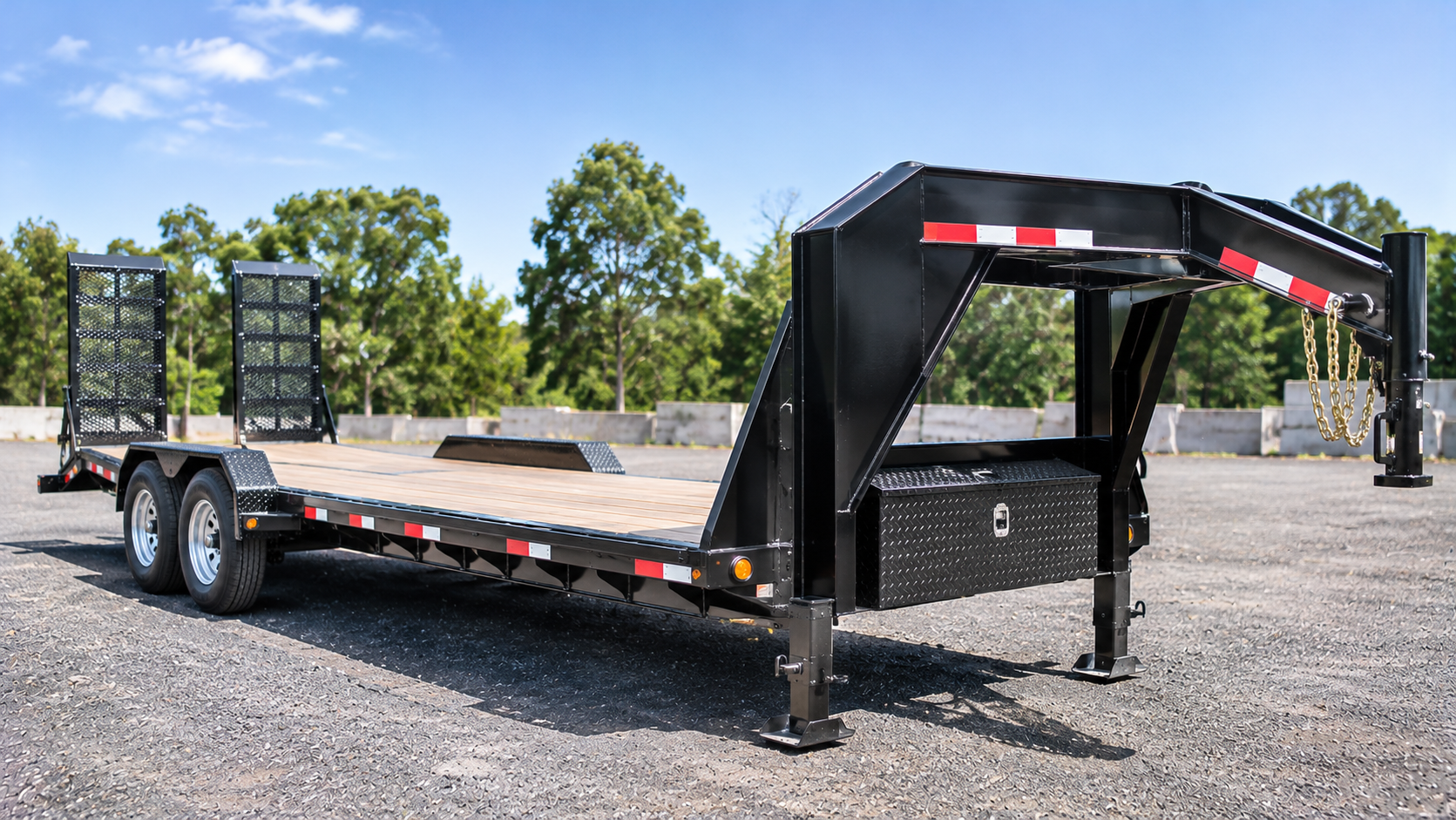
TAFS recently helped finance a new gooseneck trailer valued at $33,000.

New commercial trailers can be purchased for a wide range of business uses, with the lender considering the asset specification, purchase price, supplier and how the trailer will fit into the business.

TAFS reviewed the transaction and matched the purchase with a lender suited to the new commercial asset.

The $33,000 gooseneck trailer was successfully settled, allowing the client to add a brand-new trailer to their operation.

Deals like this show how new trailer finance can support businesses adding capacity or purchasing a trailer built around a particular commercial requirement.

  • New gooseneck trailer
  • $33,000 purchase
  • New commercial trailer
Black gooseneck trailer in a sunlit lot
Why TAFS

Why businesses use TAFS for new trailer finance

80+ Lenders

We have access to a broad panel of banks and non-bank commercial lenders with different approaches to trailer finance and business profiles.

Internal credit team

Applications are reviewed before they're submitted so the lender receives a clear picture of the business, asset and transaction.

93% Client success rate

We focus on matching applications with lenders suited to the purchase rather than taking the same approach to every transaction.

Specialised asset finance brokers

Our team works with businesses purchasing trucks, trailers, machinery and commercial equipment every day. We understand that new trailer purchases can involve factory orders, deposits, custom specifications and build timelines that need to be considered before settlement.

Trusted lender partners:

Azora Banjo Bizcap Branded Financial Capify CFI Finance Dynamoney Finance One Grenke Judo Bank Lumi MoneyMe
The TAFS Process

How new trailer finance works with TAFS

  • Step 1

    Tell us what you're ordering

    Send us the trailer quote, specification, purchase price, supplier and expected delivery date. If the trailer is custom-built, include the proposed payment schedule.

  • Step 2

    We review the application

    Our team looks at the business, trailer, deposit position and overall purchase.

  • Step 3

    We compare suitable lenders

    We assess the application across our lender panel and identify suitable finance options.

  • Step 4

    We manage the process through delivery

    As the trailer approaches completion, we coordinate the final lender requirements and settlement documentation.

FAQ

New Trailer Finance FAQs

We don't just send applications out. We structure them properly from the start.

  • Can I finance a brand-new trailer?

    Yes. TAFS can arrange commercial finance for eligible new trailers purchased from manufacturers and dealers, subject to lender requirements.

  • Can I finance a trailer that hasn't been built yet?

    Potentially. You can discuss the finance before construction is complete. The lender will generally require clear build specifications, supplier information and final asset documentation before settlement.

  • Can I finance a custom-built trailer?

    Potentially. Custom-built trailers can be considered where the lender is comfortable with the business, asset specification and transaction.

  • Can I finance the trailer deposit?

    It depends on the lender and transaction. Some businesses pay the deposit themselves and finance the remaining balance, while other structures may be available.

  • Can trailer progress payments be financed?

    Potentially, although standard asset finance is often structured around a completed asset. Progress-payment builds can require a more specific finance structure. Speak with TAFS before committing to the supplier's payment schedule.

  • Can I get approved before my trailer is finished?

    Potentially. The business and proposed trailer can be assessed before completion, although final approval and settlement can still depend on the completed asset and current lender requirements.

  • What happens if the trailer build is delayed?

    If delivery moves significantly, the lender may need updated information or a refreshed approval before settlement. Keep TAFS updated if the manufacturer changes the expected completion date.

  • What if my trailer price increases during the build?

    Changes to the build specification can increase the final purchase price. The finance amount may need to be reassessed if the total cost changes.

  • Can I include fitted equipment in the trailer finance?

    Potentially. Equipment permanently fitted to the completed trailer may be able to form part of the overall asset purchase, depending on lender requirements.

  • Can I finance more than one new trailer?

    Yes. Businesses can apply to finance multiple trailers as part of a fleet expansion or replacement program.

  • Do I need a deposit for new trailer finance?

    Not in every case. The required contribution depends on the business, finance amount and lender.

  • Can I finance a new trailer without buying a truck?

    Yes. If you already own or finance the vehicle that will operate with the trailer, the new trailer may be financed separately.

  • Can I finance a new prime mover and trailer together?

    Potentially. The two assets may be financed together or separately depending on the purchase and lender.

    Prime Mover Finance →
  • Can a new ABN business finance a new trailer?

    Potentially. Industry experience, expected work, credit profile, deposit and the purchase itself can influence the options available.

    New ABN Trailer Finance →
  • Can a sole trader finance a new trailer?

    Yes. Sole traders can apply for new commercial trailer finance where the transaction meets lender requirements.

    Sole Trader Trailer Finance →
  • Is low doc new trailer finance available?

    Potentially. Low doc options may be available to eligible businesses depending on their trading history, credit profile and lender requirements.

    Low Doc Trailer Finance →
  • How long can I finance a new trailer for?

    Finance terms vary between lenders and applications. Because the trailer is new, its expected working life can support a range of commercial finance terms, subject to the lender and business profile.

  • How quickly can new trailer finance be approved?

    Straightforward applications can move quickly once the required information is available. Custom builds and transactions involving deposits or progress payments can require additional documentation and coordination.

Ready to finance your next new trailer?

Tell us what you're ordering, who is building it and when it's expected to be delivered.

We'll review the trailer, purchase structure and your business, then compare suitable finance options across our lender panel.