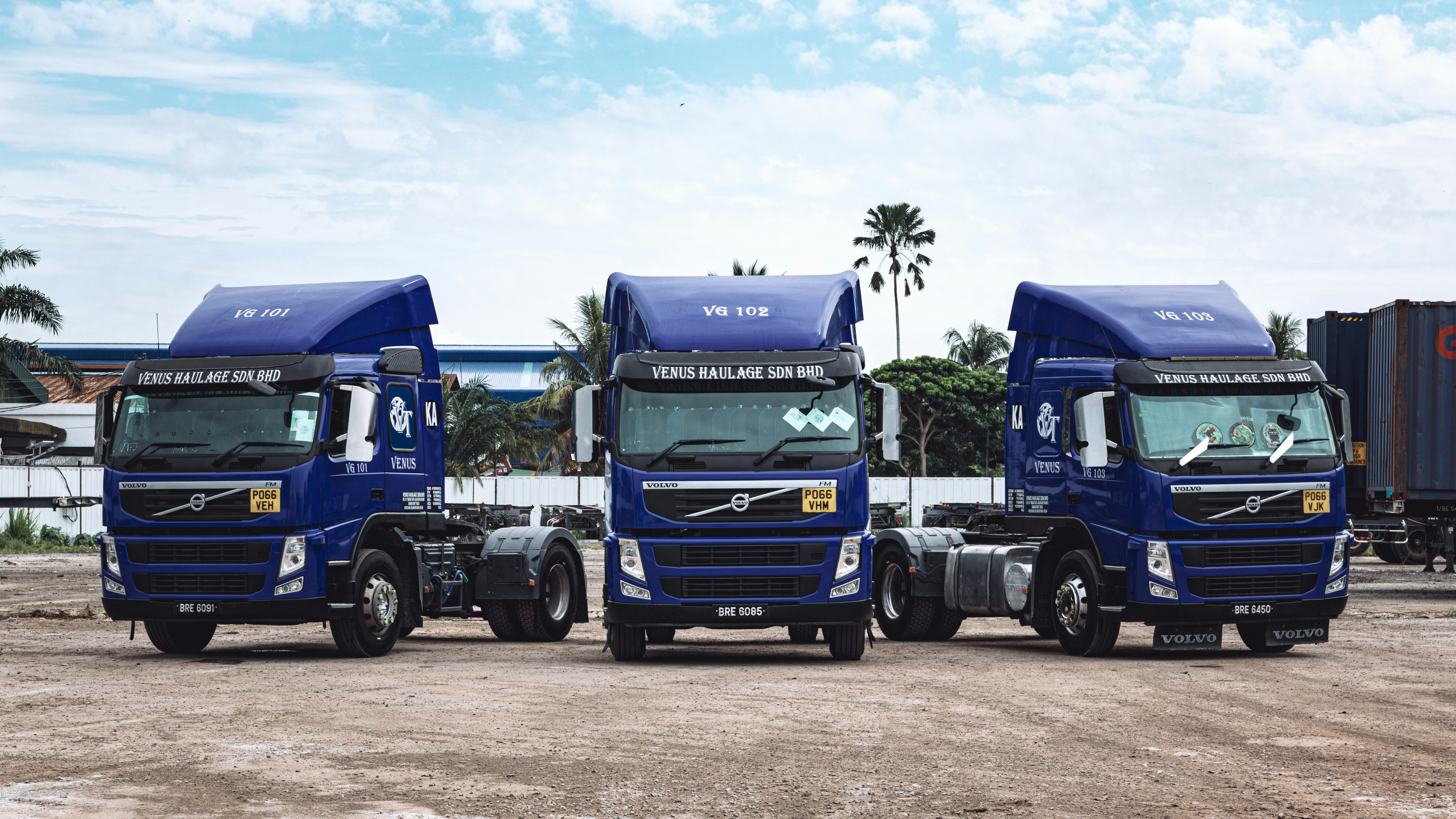

Truck Running Costs After Instant Asset Write Off
Read time: 22 min

Buying a truck and claiming an instant asset write-off does not mean the tax deductions associated with that truck stop after the purchase.
The purchase of the truck and the ongoing cost of operating it are separate tax considerations.
Depending on the business and how the vehicle is used, ongoing commercial truck expenses may include:
- Fuel
- Registration
- Insurance
- Repairs
- Servicing
- Tyres
- Finance interest
- Tolls
- Other eligible operating expenses
Depreciation may also remain relevant where the truck does not qualify for the instant asset write-off.
This distinction is particularly important for Australian owner-operators because most commercial trucks cost significantly more than the current instant asset write-off threshold.
From 1 July 2026, eligible small businesses using simplified depreciation can potentially immediately deduct the business-use portion of eligible depreciating assets costing less than $20,000 per asset.
Most:
- Prime movers
- Rigid trucks
- Tippers
- Refrigerated trucks
- Crane trucks
- Tankers
- Tow trucks
will cost more than that.
For those vehicles, depreciation will generally become more relevant than an immediate write-off.
But whether the truck is immediately written off or depreciated over time, eligible commercial vehicle expenses incurred while operating the truck can still need to be considered separately.
The Asset Finance Shop (TAFS) primarily arranges chattel mortgage finance for commercial trucks and can compare suitable finance options through access to more than 80 bank and non-bank lenders.
This guide explains how the instant asset write-off for trucks works in 2026 and what running costs, finance expenses and depreciation may still need to be considered after the truck has been purchased.
What Is the Instant Asset Write-Off for Trucks?
The instant asset write-off allows an eligible small business to immediately deduct the taxable-use portion of a qualifying depreciating asset where the relevant requirements are satisfied.
From 1 July 2026, eligible small businesses using the simplified depreciation rules can potentially claim an immediate deduction for eligible depreciating assets costing:
Less than $20,000 per asset.
The business generally needs to:
- Carry on a business
- Have aggregated annual turnover below $10 million
- Use the simplified depreciation rules
- Purchase an eligible depreciating asset
- Use the asset for a taxable business purpose
- Have an eligible asset cost below $20,000
- First use or install the asset ready for use in the relevant income year
The threshold applies separately to each eligible asset.
Eligible new and second-hand assets can potentially qualify.
What Does the Instant Asset Write-Off Actually Do?
The write-off affects how the cost of purchasing the asset is deducted.
It does not mean:
- The truck is free
- The government reimburses the purchase price
- The truck finance disappears
- Future truck expenses can no longer be claimed
- Every truck automatically qualifies
A tax deduction reduces taxable income.
The actual tax benefit depends on the circumstances of the business.
Can You Claim Truck Running Costs After an Instant Asset Write-Off?
Potentially, yes.
This is the main distinction this guide addresses.
The instant asset write-off relates to the eligible cost of acquiring the asset.
Truck running costs relate to the cost of operating the truck after purchase.
Those are different expenses.
For example, a business may purchase an eligible lower-value truck and claim an immediate deduction for its eligible cost.
The business may then continue to incur:
- Diesel
- Insurance
- Registration
- Repairs
- Servicing
- Tyres
while operating that truck.
Those ongoing costs do not simply disappear because the purchase price received an immediate deduction.
Each expense still needs to satisfy the normal tax requirements.
What Truck Running Costs May Be Deductible?
Depending on the business and vehicle use, common expenses that may need to be considered include:
Fuel
Fuel is one of the largest operating costs for many transport businesses.
For a truck used entirely for business freight work, eligible fuel costs may potentially be deductible.
Businesses should retain suitable records of fuel expenditure.
Oil and Lubricants
Oil and other operating fluids used in maintaining the truck may form part of normal operating costs.
Registration
Eligible registration expenses for a business truck may potentially be deductible to the extent they relate to business use.
Insurance
Commercial vehicle insurance premiums may potentially form part of the deductible cost of operating the truck.
This can include eligible insurance associated with the business vehicle itself.
Repairs
Eligible repairs to an income-producing truck may potentially be deductible.
However, there is an important distinction between:
repairing an existing truck
and:
improving or substantially upgrading the truck.
An expense that restores the truck to its previous working condition may be treated differently from a capital improvement that significantly upgrades the asset.
Your accountant should confirm the treatment of larger repair or modification expenses.
Servicing
Regular servicing can potentially form part of normal business vehicle operating costs.
Examples may include:
- Scheduled servicing
- Oil changes
- Filters
- Routine mechanical maintenance
Tyres
Tyres are a significant cost for heavy transport operators.
Eligible tyre replacement costs incurred in operating the business truck may potentially be deductible, depending on the circumstances.
Tolls
Business-related toll costs may also form part of the wider operating cost of running a transport business.
Finance Interest
Where money is borrowed to purchase an income-producing truck, eligible business-use finance interest may potentially be deductible.
Interest is different from the principal component of the truck repayment.
Depreciation
Where the truck does not qualify for an immediate write-off, depreciation may apply instead.
These costs are all separate considerations.
Instant Asset Write-Off vs Truck Running Costs
The simplest way to understand the difference is:
|
Expense |
What it relates to |
|
Instant asset write-off |
Cost of acquiring an eligible asset |
|
Depreciation |
Cost of a higher-value asset claimed over time |
|
Fuel |
Operating the truck |
|
Insurance |
Protecting the truck/business |
|
Registration |
Keeping the vehicle registered |
|
Repairs |
Restoring or maintaining the truck |
|
Servicing |
Routine maintenance |
|
Tyres |
Operating and maintaining the truck |
|
Finance interest |
Cost of borrowing money |
|
Principal repayment |
Paying back the amount borrowed |
The purchase and the running costs should not be treated as one single tax expense.
Example: Truck That Qualifies for the Instant Asset Write-Off
Consider an eligible business purchasing an older commercial vehicle for:
$18,000
Assume the truck satisfies the relevant eligibility requirements and is used entirely for business.
The eligible purchase cost may potentially qualify for the instant asset write-off.
During the following year, the business also spends:
Fuel: $18,000
Insurance: $3,000
Registration: $2,500
Servicing and repairs: $6,000
Tyres: $4,000
The fact that the $18,000 truck purchase may have been immediately deductible does not automatically prevent eligible operating costs from also being considered separately.
The business still needs to keep records and satisfy the normal deduction rules.
Example: Truck That Does Not Qualify for the Instant Asset Write-Off
Now consider:
Truck purchase price: $180,000
That truck exceeds the $20,000 threshold.
The business cannot simply deduct the entire $180,000 under the instant asset write-off.
Instead, depreciation will generally become relevant.
The truck may also generate separate eligible expenses for:
- Fuel
- Registration
- Insurance
- Repairs
- Servicing
- Tyres
- Finance interest
This is why a higher-value truck can still produce significant business deductions even though it does not qualify for the instant asset write-off.
What Happens if the Truck Costs $20,000 or More?
For an eligible small business using simplified depreciation, an eligible depreciating asset costing $20,000 or more generally falls outside the immediate write-off.
It will generally be dealt with under the applicable depreciation rules instead.
Under the small business simplified depreciation system, higher-value eligible assets are generally added to the small business depreciation pool.
The applicable depreciation treatment should be calculated by your accountant.
Can You Claim the First $20,000 of a More Expensive Truck?
Generally, no.
Consider:
Truck cost: $150,000
The business does not generally apply the instant asset write-off like this:
First $20,000: Immediate deduction
Remaining $130,000: Depreciation
The $20,000 amount is a threshold.
It determines whether the asset qualifies for the immediate deduction.
It is not simply a deduction that can be applied to the first $20,000 of every truck purchase.
Can a Used Truck Qualify?
Potentially.
Eligible second-hand assets can qualify for the instant asset write-off where the other requirements are satisfied.
This can make the write-off more relevant to:
- Older light trucks
- Older rigid trucks
- Used commercial vans
- Lower-value trailers
- Other lower-value business vehicles
Most late-model heavy commercial trucks will still exceed the threshold.
Does Financing the Truck Change the Write-Off?
Not simply because money has been borrowed.
Consider:
Truck A
Purchase price: $18,000
Purchased with cash: Yes
Potentially eligible if the relevant requirements are satisfied.
Truck B
Purchase price: $18,000
Financed: Yes
Potentially eligible if the relevant requirements are satisfied.
Truck C
Purchase price: $150,000
Financed: Yes
The finance does not bring the truck under the $20,000 threshold.
The tax treatment of the truck and the way the business funds it are separate decisions.
Can You Claim Truck Finance Interest?
Potentially.
TAFS primarily arranges commercial truck purchases using chattel mortgage finance.
Under a chattel mortgage:
- The business purchases the truck
- The business owns it from settlement
- The lender registers security over the truck
- The business makes regular repayments
A repayment generally contains:
Principal
The amount used to reduce the loan balance.
Interest
The cost of borrowing.
Eligible business-use interest may potentially be deductible.
The principal component should not simply be treated the same way as the interest.
Is the Whole Truck Repayment Tax Deductible?
Do not assume so.
Consider:
Monthly truck repayment: $5,000
That does not automatically mean:
Monthly deductible expense: $5,000
The repayment normally contains principal and interest.
The truck itself may also be depreciated separately.
This creates several different tax considerations:
- Principal
- Interest
- Depreciation
- GST
- Running costs
Your accountant should separate the relevant components.
Can You Claim Depreciation and Finance Interest?
Potentially.
They relate to different costs.
Depreciation
Relates to the cost of the truck itself.
Finance Interest
Relates to the cost of borrowing money to purchase the truck.
Claiming an eligible depreciation deduction and eligible finance interest is not necessarily claiming the same expense twice.
They arise from different parts of the transaction.
Can You Claim Fuel After Writing Off the Truck?
Potentially.
The purchase-price deduction and fuel expense are separate.
For an eligible truck used for business:
Purchase cost: Asset expenditure
Diesel: Operating expenditure
The fact that the truck's eligible acquisition cost was immediately deducted does not mean future fuel expenses automatically lose their normal tax treatment.
Can You Claim Registration After Writing Off the Truck?
Potentially.
Eligible registration costs incurred while operating a business vehicle may still be considered separately from the asset's original purchase price.
Can You Claim Insurance After Writing Off the Truck?
Potentially.
Commercial vehicle insurance is another ongoing cost of operating the truck.
It is separate from the original acquisition cost.
Can You Claim Repairs After Writing Off the Truck?
Potentially, but repairs require care.
There is a difference between:
repairing wear, damage or deterioration
and:
substantially improving or upgrading the truck.
For example:
Repair
Replacing a failed component to restore the truck to working order.
Improvement
Adding equipment or making a substantial modification that improves the asset beyond its previous condition.
Capital improvements may receive different tax treatment from ordinary repairs.
Do not assume every workshop invoice can be immediately deducted as a repair.
What About Repairs Immediately After Buying a Used Truck?
These can require particular care.
If a truck is purchased with an existing defect and the business immediately spends money fixing that pre-existing problem, the tax treatment may differ from routine repairs caused by normal business use after acquisition.
Your accountant should review significant repair costs associated with recently purchased used trucks.
What About Major Truck Modifications?
Modifications can include:
- Tipper body installation
- Crane installation
- Refrigeration equipment
- Tray conversion
- Sleeper modification
- Mine-spec fit-out
- Additional tanks
- Hydraulic systems
These costs may be capital in nature rather than ordinary running expenses.
They may need to form part of the asset's cost or be treated as separate depreciating assets depending on the circumstances.
Can You Claim Tyres?
Potentially.
Tyres are a normal and often substantial transport operating cost.
For a commercial truck travelling high annual kilometres, tyre expenditure can be significant.
The eligible business-use cost may potentially form part of the truck's operating expenses.
Can You Claim Tolls?
Potentially where the toll relates to business travel.
For interstate and metropolitan transport operators, tolls may form a meaningful part of vehicle operating expenses.
Maintain records showing the business purpose of the expense.
What About Parking?
Business-related parking expenses can differ from fines or penalties.
Keep suitable records and ask your accountant how particular parking costs should be treated.
Can You Claim Traffic Fines?
Do not assume so.
Fines and penalties are fundamentally different from ordinary truck operating expenses.
A truck expense being incurred while working does not automatically make every payment deductible.
What if the Truck Has Private Use?
Only the eligible business-use portion should generally be considered.
Consider:
Business use: 80%
Private use: 20%
The business may need to apportion expenses such as:
- Fuel
- Insurance
- Registration
- Repairs
- Finance interest
- Depreciation
Commercial heavy trucks used solely within a transport business may have a simpler business-use position than mixed-use vehicles such as some utes.
Why Record Keeping Matters
Running costs accumulate throughout the year.
Without records, it can become difficult to substantiate what was actually spent operating the truck.
Useful records may include:
- Fuel receipts
- Fuel-card statements
- Service invoices
- Repair invoices
- Tyre invoices
- Insurance documents
- Registration documents
- Finance statements
- Loan documents
- Toll records
- Vehicle-use records where required
The ATO generally requires businesses to maintain records supporting their claims.
What If the Truck Was Written Off Completely in Year One?
If an eligible truck received an immediate deduction for its acquisition cost, the business cannot simply depreciate that same original acquisition cost again in later years.
However, that does not stop separate eligible operating expenses being considered.
For example:
Original truck cost: Already deducted
Later:
- Fuel
- Insurance
- Registration
- Repairs
- Servicing
are separate expenses.
That is the central difference between:
claiming the asset
and:
claiming the cost of operating the asset.
What if the Truck Did Not Qualify for the Instant Asset Write-Off?
Then depreciation may remain relevant.
For most higher-value commercial trucks, the tax picture may therefore include:
Depreciation
For the truck.
Finance Interest
For the cost of borrowing.
Running Expenses
For operating the truck.
GST
Where the relevant requirements are satisfied.
A business can therefore have several different categories of truck-related tax treatment at the same time.
Instant Asset Write-Off vs Depreciation vs Running Costs
|
Item |
Purpose |
|
Instant asset write-off |
Immediate deduction for qualifying lower-value asset |
|
Depreciation |
Deduction for qualifying higher-value asset over time |
|
Finance interest |
Cost of borrowing |
|
Fuel |
Operating cost |
|
Insurance |
Operating cost |
|
Registration |
Operating cost |
|
Repairs |
Maintenance cost, subject to capital/revenue distinction |
|
Servicing |
Operating/maintenance cost |
|
Tyres |
Operating cost |
|
Tolls |
Business travel cost |
The business should not treat all of these as though they are the same type of deduction.
Example: Owner-Driver With a $200,000 Prime Mover
Consider:
Prime mover: $200,000
Business use: 100%
Finance: Chattel mortgage
The prime mover exceeds the instant asset write-off threshold.
The business may therefore need to consider:
- Depreciation on the truck
- Eligible finance interest
- Fuel
- Registration
- Insurance
- Repairs
- Servicing
- Tyres
- Tolls
The fact that the truck itself cannot be immediately written off does not mean there are no tax deductions associated with operating it.
Example: Used $18,000 Commercial Truck
Consider:
Truck: $18,000
Eligible business: Uses simplified depreciation
Business use: 100%
Assume the truck satisfies the instant asset write-off requirements.
The acquisition cost may potentially be immediately deducted.
During the year the business also spends:
Fuel: $12,000
Repairs: $4,000
Registration: $2,000
Insurance: $2,500
These expenses still need to be considered separately.
Example: Truck With Mixed Business and Private Use
Consider:
Truck purchase: $70,000
Business use: 75%
Private use: 25%
The truck exceeds the instant asset write-off threshold.
Depreciation may apply.
The business-use percentage may also affect eligible claims for:
- Depreciation
- Fuel
- Repairs
- Insurance
- Registration
- Finance interest
The private portion should not simply be treated as a business deduction.
Does GST Affect Truck Running Costs?
Potentially.
GST-registered businesses may have GST considerations associated with eligible business purchases and operating expenses.
The GST result can depend on:
- GST registration
- Business use
- Tax invoices
- Seller
- Type of expense
The income tax deduction and GST credit are separate calculations.
Does GST Affect the Instant Asset Write-Off Threshold?
Potentially.
The relevant asset cost can depend on whether the business is entitled to claim GST credits.
For a GST-registered business entitled to a full GST credit, the relevant tax cost may differ from that of a business that cannot claim the GST.
Confirm the correct asset cost with your accountant before deciding whether the truck falls below the threshold.
Can You Claim Expenses if the Truck Is Financed?
Potentially.
Truck finance does not automatically prevent the business from claiming eligible operating expenses.
The finance structure determines:
- Amount borrowed
- Deposit
- Repayment
- Term
- Balloon
- Interest
The tax rules determine how:
- Truck
- Interest
- Running expenses
are treated.
Does a Balloon Increase the Tax Deduction?
Not automatically.
A balloon changes the loan repayment structure.
For example:
Option A
Finance: $180,000
Balloon: $0
Option B
Finance: $180,000
Balloon: $40,000
Option B may produce a lower regular repayment.
But the $40,000 still remains owing at the end.
Choosing a larger balloon does not automatically create a larger tax deduction.
Does a Bigger Deposit Reduce Tax Deductions?
The deposit primarily changes how much the business needs to borrow.
For example:
Truck: $180,000
Deposit: $50,000
Finance: $130,000
The truck does not become a $130,000 asset simply because that is the finance amount.
The tax cost and finance amount are separate concepts.
Can Trade-In Equity Change the Instant Asset Write-Off?
Do not assume so.
Consider:
Replacement truck: $90,000
Trade-in equity: $72,000
Amount financed: $18,000
The fact that only $18,000 needs to be financed does not automatically mean the business has purchased an $18,000 truck.
The replacement purchase and disposal of the previous truck need to be treated correctly.
Can You Claim Driver Wages?
Where the business employs drivers, eligible wage and employment costs are separate business expenses from the truck itself.
They are not part of the instant asset write-off.
The business may need to consider:
- Wages
- Superannuation
- Payroll obligations
- Other employment costs
separately from vehicle expenses.
What About Truck Cleaning?
Commercial cleaning and washing costs incurred in operating a business truck may potentially form part of normal operating expenses where they satisfy the normal deduction rules.
For some operators, this can include:
- Exterior washing
- Cab cleaning
- Trailer cleaning
- Refrigerated-body cleaning
depending on the business and use.
What About Refrigerated Trucks?
Refrigerated transport operators can have additional operating costs such as:
- Refrigeration unit servicing
- Refrigeration repairs
- Fuel or energy used by the refrigeration system
- Temperature-monitoring equipment
- Body maintenance
The treatment depends on the nature of each cost.
Significant equipment replacement or upgrades may be capital rather than ordinary repairs.
What About Tipper and Earthmoving Trucks?
Civil and earthmoving operators can incur additional expenses associated with:
- Hydraulic systems
- Hoists
- Bodies
- Heavy tyre wear
- Off-road maintenance
- Cleaning
- Repairs
Again, ordinary maintenance and capital improvements should be distinguished.
Should I Buy a Truck Just for the Tax Deduction?
Generally, the commercial need should come first.
A truck may make sense because it:
- Replaces unreliable equipment
- Supports a new contract
- Increases fleet capacity
- Reduces subcontractor costs
- Reduces downtime
- Improves delivery reliability
- Generates additional revenue
Tax deductions can affect the financial outcome.
They should not be the only reason the business commits to a large commercial asset.
What Should I Ask My Accountant?
Before buying or operating a financed truck, ask:
- Does my business qualify for simplified depreciation?
- Does this truck qualify for the instant asset write-off?
- What is the relevant asset cost?
- Does GST affect the threshold?
- What happens if the truck costs $20,000 or more?
- How will depreciation be calculated?
- What business-use percentage applies?
- Can finance interest be claimed?
- How should fuel be treated?
- How should registration be treated?
- How should insurance be treated?
- Which repairs are immediately deductible?
- Which modifications are capital?
- How should tyres be treated?
- What records should we keep?
- What happens when the truck is eventually sold or traded?
What Should I Ask My Finance Broker?
TAFS handles the finance side of the truck purchase.
Useful questions include:
- How much can I finance?
- Is a deposit required?
- Can trade-in equity be used?
- What term is available?
- What interest rate applies?
- What fees apply?
- What will the repayment be?
- Is a balloon available?
- What will be owing at the end?
- Can I refinance later?
- What happens if I sell the truck?
- Can dealer, private-sale and auction trucks be financed?
How TAFS Can Help Finance the Truck
TAFS specialises in commercial asset finance.
The finance process can include:
- Reviewing the business
- Reviewing the truck
- Assessing available documentation
- Completing an initial credit assessment
- Comparing suitable lenders
- Structuring the deposit, term and balloon
- Submitting the formal application
- Coordinating approval and settlement
TAFS can compare suitable commercial truck finance options through access to more than 80 bank and non-bank lenders.
TAFS primarily arranges chattel mortgage finance for commercial trucks.
The tax treatment should be confirmed separately with your accountant or registered tax adviser.
Frequently Asked Questions
Can I Claim Truck Running Costs After Using the Instant Asset Write-Off?
Potentially.
The instant asset write-off relates to the acquisition cost of an eligible asset.
Eligible operating expenses such as fuel, insurance, registration, repairs and servicing are separate costs.
What Truck Running Costs Can Be Tax Deductible?
Depending on the business and use of the truck, eligible costs can potentially include:
- Fuel
- Registration
- Insurance
- Repairs
- Servicing
- Tyres
- Finance interest
- Other business operating expenses
Can I Claim Fuel After Writing Off the Truck?
Potentially.
Fuel is an operating expense and is separate from the original purchase cost of the truck.
Can I Claim Repairs?
Potentially.
Ordinary repairs may be treated differently from capital improvements or major modifications.
Can I Claim Registration?
Potentially where it relates to eligible business use.
Can I Claim Truck Insurance?
Potentially where the insurance cost relates to the business vehicle.
Can I Claim Finance Interest?
Eligible business-use interest may potentially be deductible.
Can I Claim the Whole Truck Loan Repayment?
Do not assume so.
The repayment generally contains principal and interest.
Can I Claim Depreciation and Truck Running Costs?
Potentially.
They relate to different expenses.
Can I Claim Depreciation if I Already Claimed the Truck Under the Instant Asset Write-Off?
You should not simply claim depreciation again on the same acquisition cost that has already received an immediate deduction.
Separate later expenses may still have their own treatment.
What Happens if the Truck Costs More Than $20,000?
For eligible businesses using simplified depreciation, higher-value eligible assets generally move into the applicable depreciation treatment rather than receiving the immediate write-off.
Can I Claim the First $20,000 of a More Expensive Truck?
Generally, no.
The $20,000 amount is an eligibility threshold for the asset.
Can Used Trucks Qualify?
Potentially.
Eligible new and second-hand assets can qualify where all relevant requirements are satisfied.
Does Financing Affect Eligibility?
Not by itself.
A financed truck and a cash-purchased truck are assessed under the applicable tax rules.
Does a Deposit Change the Truck's Tax Cost?
Not simply because the amount borrowed becomes smaller.
Does a Trade-In Bring the Truck Under $20,000?
Do not assume so.
The replacement purchase and disposal need to be treated separately.
Does Private Use Matter?
Yes.
Eligible claims generally need to reflect the business-use portion of the truck.
Do I Need to Keep Receipts?
Businesses should maintain records supporting their expenses and tax claims.
Does TAFS Provide Tax Advice?
No.
TAFS specialises in commercial asset finance.
Speak with your accountant or registered tax adviser about tax treatment.
How Many Lenders Can TAFS Compare?
TAFS has access to more than 80 bank and non-bank lenders.
Finance Your Commercial Truck With TAFS
The instant asset write-off is only one part of the financial picture when buying and operating a commercial truck.
For an eligible lower-value vehicle, the acquisition cost may potentially qualify for an immediate deduction.
For a higher-value truck, depreciation may instead apply.
After purchase, the business may also continue to incur separate costs such as:
- Fuel
- Registration
- Insurance
- Repairs
- Servicing
- Tyres
- Finance interest
- Other commercial vehicle expenses
For most transport businesses, these ongoing expenses can be just as important as the tax treatment of the original truck purchase.
TAFS can help structure the commercial finance side of the purchase through access to more than 80 bank and non-bank lenders.
Your accountant can then confirm:
- Instant asset write-off eligibility
- Depreciation
- GST
- Finance interest
- Running-cost deductions
- Business-use adjustments
The Asset Finance Shop (TAFS) is a commercial asset finance brokerage based in Sydney. Information on this page is general in nature and doesn’t take your personal circumstances into account. Speak to a TAFS broker for options tailored to your business, and to your accountant regarding tax treatment.