
Farm Equipment Finance for Australian Farmers
Read time: 23 min
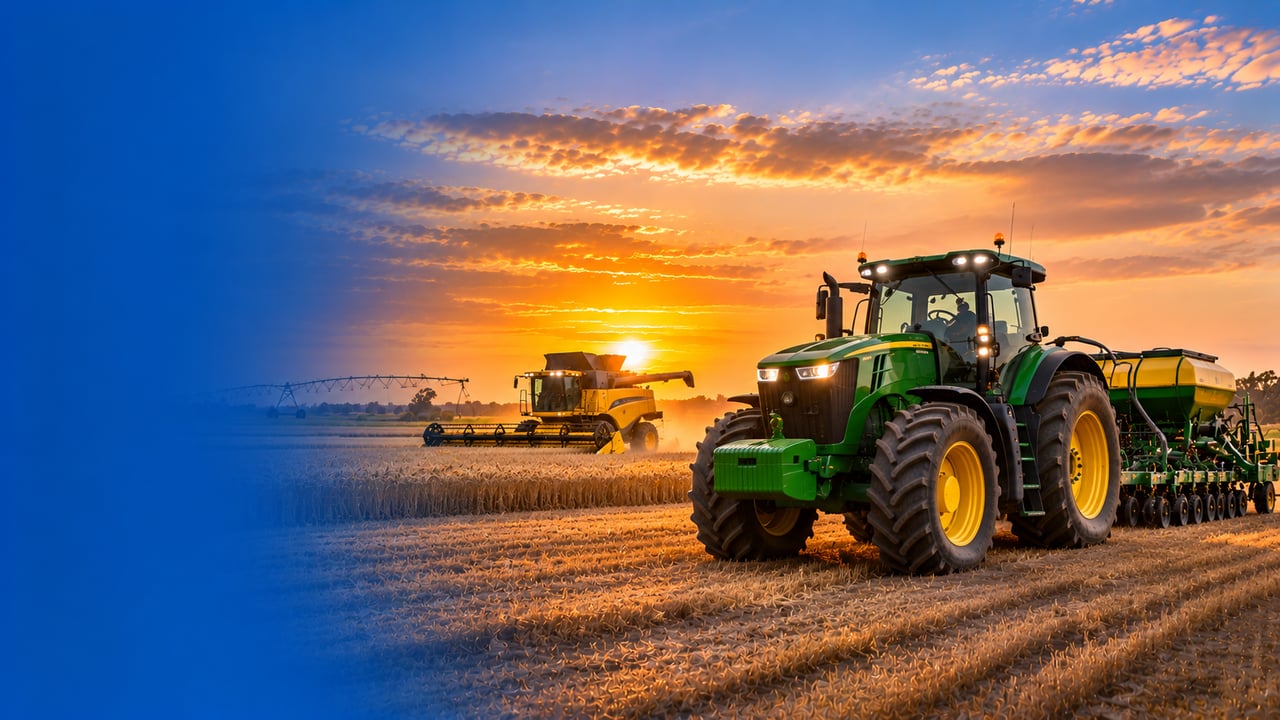
Australian farmers often need to invest in equipment well before the income generated by that equipment reaches the business.
A tractor may be required before planting.
Irrigation infrastructure may need to be upgraded before summer.
A harvester may need replacing before the next harvest.
A sprayer, loader, telehandler or implement may be required immediately to keep operations moving.
Paying the full purchase price from cash can place unnecessary pressure on farm working capital.
Equipment and machinery finance in Australia can allow eligible farmers and agribusinesses to purchase essential equipment while spreading the cost over an agreed finance term.
This can help preserve cash for expenses such as:
- Seed
- Fertiliser
- Fuel
- Feed
- Labour
- Insurance
- Repairs
- Livestock
- Transport
- Contractors
- Seasonal operating costs
The Asset Finance Shop (TAFS) specialises in commercial asset finance and has access to more than 80 bank and non-bank lenders.
TAFS can arrange eligible finance for new and used agricultural machinery including tractors, harvesters, headers, seeders, sprayers, balers, loaders, telehandlers, agricultural trailers, irrigation equipment, implements and attachments.
Selected lenders can also consider:
- Seasonal repayment structures
- Low doc applications
- Private-sale machinery
- Auction purchases
- Used equipment
- Sole traders
- Newer agricultural businesses
This guide explains how farm equipment finance works, what machinery can be funded, how lenders assess agricultural businesses and how farmers can compare finance without unnecessarily tying up working capital.
What Is Farm Equipment Finance?
Farm equipment finance is commercial asset finance used to purchase machinery and equipment required for agricultural business activities.
Instead of paying the full purchase price upfront, the farm finances an approved amount and repays it over an agreed term.
For example:
Tractor purchase: $180,000
Trade-in equity: $30,000
Finance required: $150,000
The farmer can begin using the replacement tractor while retaining more cash for the other costs of running the property.
Equipment finance can potentially be used for:
- Replacement machinery
- Additional machinery
- Farm expansion
- Irrigation upgrades
- Productivity improvements
- New contracts
- Increased acreage
- Reduced contractor reliance
- Replacement of unreliable equipment
The lender assesses both:
the agricultural business
and:
the equipment being purchased.
What Farm Equipment Can Be Financed?
Agricultural businesses use a wide range of machinery.
Selected lenders can potentially finance equipment including the following.
Tractors
Finance can be available for:
- New tractors
- Used tractors
- Utility tractors
- High-horsepower tractors
- Compact tractors
- Track tractors
The lender may consider:
- Make
- Model
- Age
- Operating hours
- Purchase price
- Market value
- Condition
Harvesters and Headers
Eligible new and used harvesting machinery can potentially be financed.
Higher-value harvesters may require more detailed lender assessment because of:
- Purchase price
- Asset age
- Operating hours
- Specialist resale market
- Seasonal use
The lender may also want to understand the farm's production cycle and income.
Seeders
Seeders and planting equipment can potentially be financed where they are used as part of the agricultural business.
The lender may consider:
- Purchase price
- Equipment age
- Condition
- Expected working life
Sprayers
Agricultural spraying equipment can include:
- Self-propelled sprayers
- Tow-behind sprayers
- Mounted spraying equipment
These assets may potentially be financed individually or as part of a larger machinery purchase.
Balers
Eligible balers can potentially be financed for:
- Hay production
- Livestock operations
- Contract farming
- Agricultural businesses
New and used machines may be considered.
Spreaders
Finance may be available for fertiliser and other agricultural spreading equipment where it forms part of the business's operations.
Loaders
Farm businesses may use:
- Front-end loaders
- Wheel loaders
- Compact loaders
for:
- Feed
- Grain
- Materials handling
- Property maintenance
- General farm work
These assets may fit commercial machinery finance where lender criteria are satisfied.
Telehandlers
Telehandlers are increasingly used in:
- Grain operations
- Livestock businesses
- Large farms
- Produce handling
They can potentially be financed as identifiable commercial equipment.
Agricultural Trailers
Selected lenders may finance eligible:
- Grain trailers
- Tipping trailers
- Flat trailers
- Livestock trailers
- Other agricultural trailers
Lender treatment can depend on age and value.
Implements and Attachments
Agricultural machinery finance may potentially include:
- Ploughs
- Cultivators
- Seeders
- Slashers
- Mowers
- Rippers
- Spreaders
- Attachments
Where attachments are purchased with the main machine, the lender may be able to consider them as part of the overall transaction.
Can Irrigation Equipment Be Financed?
Potentially.
Irrigation can be one of the largest equipment investments on a farming property.
Depending on the equipment and lender, finance may potentially be considered for identifiable commercial irrigation assets such as:
- Pumps
- Irrigation machinery
- Centre pivots
- Travelling irrigators
- Water management equipment
- Pumping systems
- Other agricultural irrigation equipment
TAFS’s existing agricultural finance material includes irrigation equipment among the types of farm machinery that may be considered.
The lender will generally want to understand exactly what equipment is being purchased.
Irrigation Equipment vs Property Improvements
This distinction can matter.
Equipment finance is generally best suited to identifiable commercial assets.
A physical irrigation machine or pump may fit an asset finance structure more naturally than permanent:
- Earthworks
- Dams
- Trenching
- Civil construction
- Property improvements
Where a project combines equipment and property works, the components may need to be separated.
For example:
Irrigation equipment: $140,000
Installation and earthworks: $70,000
The lender may not necessarily finance the entire:
$210,000
under one equipment facility.
TAFS can review the supplier quote and determine which components may fit commercial asset finance.
Why Do Farmers Use Equipment Finance?
Agricultural businesses often operate with significant seasonal cash requirements.
The farm may need money for:
- Inputs
- Fertiliser
- Seed
- Chemicals
- Fuel
- Labour
- Feed
- Veterinary costs
- Maintenance
- Freight
at the same time that machinery needs replacing.
Using a large amount of cash for equipment can therefore create pressure elsewhere.
Equipment finance allows the purchase cost to be spread over time.
Protecting Farm Working Capital
Working capital is particularly important in agriculture because revenue and expenses do not always occur evenly throughout the year.
Consider:
Available cash: $300,000
Tractor purchase: $190,000
Paying cash would leave:
$110,000
available for everything else.
That remaining amount may still need to cover:
- Seed
- Fertiliser
- Diesel
- Labour
- Insurance
- Repairs
- Seasonal expenses
Financing the tractor may allow the business to retain a larger cash buffer.
Does Financing Equipment Mean Paying More?
Finance creates costs such as:
- Interest
- Fees
So paying cash can produce a lower direct purchase cost.
However, the farm also needs to consider the value of retaining liquidity.
The decision should compare:
cost of finance
against:
value of keeping working capital available.
For some farms, paying cash may make sense.
For others, keeping cash available for production can be more valuable.
How Does Agricultural Cash Flow Affect Equipment Finance?
Farm income can be seasonal.
Revenue may depend on:
- Harvest
- Commodity sales
- Livestock sales
- Production cycles
- Contract work
- Weather
That makes agricultural finance different from a business receiving relatively even income every month.
Selected lenders may offer alternative repayment structures designed around farm cash flow.
These can potentially include:
- Monthly repayments
- Quarterly repayments
- Seasonal repayments
- Annual repayments
Availability depends on the lender and application.
What Are Seasonal Repayments?
Seasonal repayments aim to align finance commitments more closely with the farm's income cycle.
For example, a farm may generate most of its income following:
harvest
rather than evenly throughout the year.
A suitable lender may potentially offer a structure that reflects this timing.
Not every lender offers seasonal repayment arrangements.
This is one reason comparing lenders can matter.
Are Seasonal Repayments Always Better?
No.
A seasonal structure can suit some agricultural businesses.
A standard monthly repayment can suit others.
The farm should consider:
- Income timing
- Cash reserves
- Finance cost
- Repayment frequency
- Administrative simplicity
The right structure should suit actual farm cash flow rather than simply producing the lowest apparent monthly repayment.
What Finance Structure Does TAFS Primarily Arrange?
TAFS primarily arranges eligible agricultural machinery purchases through a chattel mortgage.
Under a chattel mortgage:
- The business purchases the machinery
- The business owns it from settlement
- The lender registers security over the asset
- Finance is repaid over an agreed term
- A deposit may be included
- Trade-in equity may contribute
- A balloon may potentially be included
TAFS’s existing agricultural finance material identifies chattel mortgage as the primary equipment finance structure it arranges.
Why Is Chattel Mortgage Common for Farm Equipment?
Agricultural businesses often want to own their machinery.
The equipment may remain in the business for:
- Several seasons
- Many years
- Multiple production cycles
A chattel mortgage provides ownership from settlement while allowing the purchase cost to be financed.
Tax treatment should be confirmed separately with an accountant.
Can I Finance a New Tractor?
Potentially.
Selected lenders can finance eligible new tractors.
A new tractor may provide:
- Manufacturer warranty
- Newer technology
- Improved fuel efficiency
- Reduced downtime
- Longer remaining working life
The lender may consider:
- Purchase price
- Deposit
- Farm financial position
- Existing machinery debt
- Proposed repayment
Can I Finance a Used Tractor?
Potentially.
Used tractor finance can reduce the upfront purchase cost compared with buying new.
The lender may assess:
- Age
- Hours
- Condition
- Service history
- Purchase price
- Market value
TAFS’s agricultural finance material confirms that eligible new and used tractors can be considered.
How Old Can a Financed Tractor Be?
There is no single age limit across every lender.
Different lenders use different asset-age policies.
The lender may consider:
- Age at settlement
- Age at end of finance term
- Operating hours
- Condition
- Value
- Brand
- Equipment type
An older tractor may still be financeable, but the available term or lender choice may be different.
Can I Finance a Used Harvester?
Potentially.
The lender may consider:
- Machine age
- Operating hours
- Condition
- Purchase price
- Expected remaining working life
- Market value
High-value or older harvesting machinery may also require:
- Valuation
- Inspection
- Additional documentation
New vs Used Farm Equipment
Neither is automatically better.
New Equipment
Potential advantages can include:
- Warranty
- Modern technology
- Longer expected life
- Lower initial maintenance
Potential disadvantages include:
- Higher purchase price
- Larger finance requirement
Used Equipment
Potential advantages can include:
- Lower purchase price
- Lower borrowing requirement
- Access to proven machinery
Potential disadvantages can include:
- Higher operating hours
- Shorter remaining working life
- Greater maintenance risk
The right choice depends on the farm.
Can Farm Machinery Be Purchased Privately?
Potentially through selected lenders.
A farmer may purchase machinery from:
- Another farmer
- Agricultural contractor
- Private business
- Equipment owner
Private-sale equipment finance can require additional checks such as:
- Seller identity
- Ownership
- Serial numbers
- Existing finance
- Equipment condition
- Purchase price
- Market value
TAFS can compare lenders that accept eligible private-sale agricultural equipment.
Can Machinery Bought at Auction Be Financed?
Potentially.
Agricultural auctions can provide access to:
- Tractors
- Harvesters
- Implements
- Loaders
- Trailers
- Other machinery
Where possible, complete an initial finance assessment before bidding.
This can help establish:
- Approximate finance capacity
- Deposit requirement
- Acceptable equipment age
- Suitable lender pathways
Final approval will still depend on the machine purchased.
Why Get Pre-Approved Before an Auction?
Auction settlement periods can be short.
An initial assessment can help the buyer understand:
- Finance budget
- Likely deposit
- Documentation requirements
- Machinery criteria
before committing to a purchase.
It does not guarantee finance for every machine.
Can I Get Equipment Finance Before Choosing the Exact Machine?
Potentially.
The initial discussion can begin with:
- Approximate equipment type
- Expected purchase price
- New or used
- Deposit
- Trade-in
Once the exact machine has been found, the lender will need the final equipment and seller details before settlement.
What Do Agricultural Machinery Lenders Assess?
The lender usually assesses two things:
the farm
and:
the equipment.
Farm Trading History
The lender may consider:
- ABN age
- Years farming
- Business structure
- Historical performance
An established agricultural business may have more documentation available.
Farming Experience
Relevant agricultural experience can be particularly important for newer businesses.
For example:
ABN: 10 months
Farming experience: 18 years
The business entity may be new.
The operator is not new to farming.
Farm Income
The lender needs to understand how the machinery repayment will be supported.
This can include income from:
- Crops
- Livestock
- Contract farming
- Produce
- Other agricultural activities
Seasonal Cash Flow
Income fluctuations are common in agriculture.
The lender may assess:
- When revenue arrives
- Major seasonal expenses
- Existing repayments
- Cash reserves
Existing Debt
This may include:
- Tractor finance
- Harvester finance
- Vehicle loans
- Business loans
- Property debt
- Equipment finance
The lender needs to understand the total repayment position.
Credit History
The lender may review:
- Existing loan conduct
- Defaults
- Late repayments
- Credit enquiries
- Current liabilities
Deposit
A deposit can reduce:
- Amount financed
- Regular repayments
- Lender exposure
But a large deposit also removes cash from the farm.
Trade-In
Existing machinery can potentially provide equity toward the replacement asset.
The Equipment
The lender may assess:
- Type
- Make
- Model
- Age
- Hours
- Condition
- Purchase price
- Market value
Do Farmers Need a Deposit?
Not always.
Some eligible agricultural businesses may potentially qualify for full purchase-price finance.
Others may need:
- Cash deposit
- Trade-in equity
- Combination of both
TAFS’s existing farm machinery guidance confirms that not every application requires a deposit.
Does a Bigger Deposit Always Make Sense?
No.
A larger deposit reduces debt but also reduces cash reserves.
Consider:
Available cash: $200,000
Option A
Deposit: $80,000
Cash remaining:
$120,000
Option B
Deposit: $30,000
Cash remaining:
$170,000
Option A creates a smaller loan.
Option B leaves another:
$50,000
available for seasonal farm expenses.
The right contribution depends on:
- Lender requirements
- Interest cost
- Farm cash flow
- Available working capital
Can I Use My Existing Tractor as a Trade-In?
Potentially.
Consider:
Current tractor value: $100,000
Current finance payout: $55,000
Potential equity:
$45,000
If the replacement tractor costs:
$200,000
the available trade equity may reduce the finance requirement to approximately:
$155,000
subject to the final transaction.
What if the Machinery Still Has Finance Owing?
That is common.
The important calculation is:
equipment value minus finance payout.
Positive equity can potentially contribute toward the replacement.
Negative equity creates a shortfall that needs to be addressed.
Can Farm Equipment Finance Include a Balloon?
Potentially.
A balloon leaves part of the finance amount outstanding at the end.
For example:
Machinery finance: $200,000
Term: 5 years
Balloon: $40,000
A balloon generally reduces the regular repayment.
However:
- $40,000 remains outstanding at the end
- Total interest can increase
- Future machinery value should be considered
The balloon should suit the farm's replacement strategy.
Is a Balloon Useful for Agricultural Machinery?
Potentially.
A farmer planning to replace machinery regularly may consider an appropriate balloon structure.
However, the balloon should be realistic relative to:
- Expected future equipment value
- Operating hours
- Finance term
- Replacement timing
A large balloon should not simply be used to create the lowest possible regular repayment.
Do Farmers Need Full Financial Statements?
Not always.
Selected lenders can offer low doc agricultural machinery finance for eligible businesses.
Alternative supporting information can potentially include:
- Business bank statements
- ABN details
- Existing finance conduct
- Credit history
- Farming experience
- Current business activity
- Asset information
TAFS’s existing agricultural content confirms that selected lenders can use bank statements and other current business information for eligible low doc machinery applications.
What Is Low Doc Farm Equipment Finance?
Low doc finance can allow an eligible agricultural business to apply without providing the complete traditional financial package required by some lenders.
A full doc application might include:
- Financial statements
- Tax returns
- BAS
- Profit and loss reports
A low doc lender may place greater weight on:
- Bank statements
- ABN history
- Existing repayment conduct
- Farming experience
- Credit profile
- Machinery
Low doc does not mean no assessment.
Can Sole Trader Farmers Apply?
Potentially.
Sole traders can apply for commercial machinery finance subject to lender criteria.
The lender may assess:
- ABN
- Farming history
- Bank statements
- Credit
- Existing debt
- Machinery
- Deposit
Can a New Agricultural Business Apply?
Potentially through selected lenders.
Where there is less trading history, the lender may place more weight on:
- Previous farming experience
- Current operations
- Farm income
- Available cash
- Deposit
- Equipment
- Credit
Example: New Farming Business Buying a Tractor
Consider:
ABN: 8 months
Farming experience: 15 years
Tractor: Used
Purchase price: $110,000
Deposit: $20,000
The lender may assess:
- Previous experience
- Current income
- Bank statements
- Credit
- Tractor
- Deposit
The newer ABN is only one part of the application.
How Are Machinery Finance Interest Rates Determined?
There is no single machinery finance interest rate that applies to every farmer.
Rates can depend on:
- Business history
- Credit profile
- Equipment
- Equipment age
- Purchase price
- Finance amount
- Deposit
- Trade-in
- Finance term
- Balloon
- Documentation
- Lender
This is why comparing finance should involve more than one advertised percentage.
What Should Farmers Compare Besides the Rate?
Compare:
- Interest rate
- Establishment fees
- Deposit
- Trade-in
- Finance amount
- Repayment frequency
- Term
- Balloon
- Documentation
- Total estimated finance cost
- Early payout conditions
- Seasonal repayment options
A slightly lower rate does not automatically make one finance structure better.
Example: Comparing Two Farm Finance Options
Consider:
Option A
Lower interest rate
Monthly repayments
Large deposit
No balloon
Option B
Slightly higher rate
Seasonal repayments
Smaller deposit
Balloon
Option A may be cheaper overall.
Option B may better match the farm's cash flow.
The farmer needs to compare both:
finance cost
and:
operational fit.
Is Dealer Finance Always the Best Option?
Not necessarily.
Dealer or manufacturer finance can be convenient.
But the available structure is generally limited to the provider or lender arrangement available through the supplier.
A farmer may still want to compare:
- Rate
- Fees
- Deposit
- Term
- Seasonal repayment
- Balloon
- Total cost
against other commercial lenders.
Bank vs Broker for Farm Equipment Finance
A bank can suit an established agricultural business with:
- Strong banking relationship
- Complete financials
- Straightforward purchase
An equipment finance broker can be useful where the farmer wants to compare different lender policies.
This can be particularly relevant for:
- Seasonal income
- Used machinery
- Private sales
- Auctions
- Low doc applications
- Newer businesses
Why Does Lender Matching Matter?
Agricultural lenders do not all use the same criteria.
For example:
Lender A
May prefer established farms with full financial statements.
Lender B
May be comfortable with seasonal cash flow.
Lender C
May accept low doc applications.
Lender D
May be comfortable financing older used machinery.
Lender E
May offer more suitable seasonal repayments.
The business and machinery have not changed.
The lender policy has.
How Fast Can Farm Equipment Finance Be Approved?
Straightforward applications can potentially be approved in as little as 24 hours once the required information is available.
More complex transactions can take longer.
This can occur where the lender requires:
- Additional financials
- Machinery valuation
- Equipment inspection
- Private seller verification
- More information about seasonal income
Is 24-Hour Approval Guaranteed?
No.
Finance remains subject to:
- Lender assessment
- Credit criteria
- Documentation
- Machinery
- Final approval
Approval and settlement are also separate stages.
What Can Speed Up Machinery Finance Approval?
Have the following available where possible:
Business
- ABN
- Entity details
- GST status
- Farming history
Financial
- Bank statements
- Existing finance
- Current liabilities
- Available deposit
Equipment
- Make
- Model
- Year
- Hours
- Purchase price
- Seller
- Quote or invoice
Trade-In
- Equipment details
- Estimated value
- Existing finance payout
Farm
- Current production
- Main sources of income
- Seasonal cash flow information where relevant
Should I Get Pre-Approved Before Buying Machinery?
Potentially.
An initial assessment can help establish:
- Approximate borrowing capacity
- Deposit requirements
- Suitable machinery age
- Available lender options
- Documentation
This can be useful when:
- Attending an auction
- Comparing several machines
- Negotiating with a dealer
- Planning a major upgrade
Financing Equipment to Reduce Contractor Costs
Farm machinery can sometimes replace ongoing contractor expenditure.
For example:
Annual contractor cost: $80,000
The farm may consider purchasing its own equipment.
The decision should compare:
- Finance repayments
- Fuel
- Labour
- Insurance
- Repairs
- Maintenance
- Resale value
against the cost and flexibility of continuing to use contractors.
Finance should support a commercial business case.
Financing Equipment to Increase Capacity
An additional machine may allow the business to:
- Farm more land
- Complete work faster
- Reduce downtime
- Take on contract work
- Complete critical tasks in shorter weather windows
For example:
A second tractor may allow:
planting and preparation work to occur simultaneously
instead of using one tractor for both jobs.
That can increase operational capacity even if the existing tractor is still working.
Financing Replacement Machinery
Replacement finance can be relevant where existing machinery has:
- High operating hours
- Increasing repair costs
- Frequent breakdowns
- Poor fuel efficiency
- Limited parts availability
- Excessive downtime
A paid-off machine does not necessarily mean it is cheap to operate.
Example: Old Tractor vs Replacement
Consider:
Existing Tractor
Finance repayment: $0
Repairs and downtime: $3,500 per month average
Replacement Tractor
Finance repayment: $2,800 per month
This does not automatically prove the replacement is cheaper.
But it shows why farmers should compare:
total operating cost
rather than only whether the old machine has a loan repayment.
Financing Irrigation to Improve Production
Irrigation equipment can potentially support:
- More reliable production
- Improved crop timing
- Reduced labour
- Improved water efficiency
- Increased usable acreage
The lender may want to understand:
- Equipment cost
- Farm operation
- Expected useful life
- Business cash flow
The business should also consider whether installation or infrastructure components need separate funding.
Can Farm Equipment Finance Be Used for Construction Equipment?
Agricultural businesses sometimes require machinery that is also commonly used in construction.
This can include:
- Excavators
- Skid steers
- Loaders
- Telehandlers
Where the equipment is being purchased for legitimate farm business use, commercial machinery finance may potentially be available.
The lender will assess:
- Asset
- Business purpose
- Purchase price
- Farm financial position
Does Farm Equipment Finance Affect Tax?
Potentially.
Tax treatment can depend on:
- Asset
- Business structure
- Business use
- GST
- Finance structure
- Current depreciation rules
TAFS provides commercial asset finance rather than tax advice.
Speak with your accountant regarding:
- Depreciation
- GST
- Finance interest
- Instant asset write-off eligibility
- Other deductions
What Should I Ask My Accountant?
Before purchasing major farm equipment, consider asking:
- Which entity should purchase the machinery?
- How will GST be treated?
- How will the asset be depreciated?
- Is finance interest deductible?
- Does any immediate write-off apply?
- How should a trade-in be treated?
- What happens when the machine is sold?
- Does the finance structure affect the tax treatment?
What Should I Ask My Equipment Finance Broker?
Ask:
- Which lenders finance this equipment?
- What rate applies?
- What fees apply?
- Is a deposit required?
- Can trade-in equity be used?
- Can the full purchase price be financed?
- What term is available?
- Are seasonal repayments available?
- Is a balloon available?
- What is the repayment?
- Can I finance used machinery?
- Can I buy privately?
- Can I buy at auction?
- Is low doc finance available?
- What documentation is required?
- How quickly can the application be assessed?
How TAFS Approaches Farm Equipment Finance
Step 1: Understand the Farm
TAFS can review:
- ABN history
- Farming experience
- Current operations
- Seasonal cash flow
- Existing finance
- Available documentation
Step 2: Review the Equipment
This can include:
- Equipment type
- New or used
- Purchase price
- Age
- Operating hours
- Seller
- Intended use
Step 3: Soft Credit Check
TAFS can begin with a soft credit check before the formal lender application.
Step 4: Internal Credit Review
The application can be assessed before lender selection.
Step 5: Compare Suitable Lenders
TAFS has access to more than 80 bank and non-bank lenders.
Different lenders can have different approaches to:
- Seasonal cash flow
- Low doc applications
- Used machinery
- Private sales
- Auctions
- Newer businesses
- Repayment frequency
Step 6: Structure the Finance
Depending on lender criteria, the structure can consider:
- Deposit
- Trade-in
- Finance amount
- Term
- Monthly repayments
- Quarterly repayments
- Seasonal repayments
- Balloon
Step 7: Formal Application
Once a suitable lender and structure have been identified, the formal application is submitted.
Step 8: Approval and Settlement
TAFS coordinates the remaining lender, supplier and machinery requirements through settlement.
Farm Equipment Finance Checklist
Before applying, prepare where available:
|
Area |
Information |
|
Business |
ABN, entity and GST status |
|
Experience |
Farming and agricultural history |
|
Financial |
Bank statements and current liabilities |
|
Existing machinery |
Current finance and repayments |
|
Equipment |
Type, make, model and purchase price |
|
Used equipment |
Age, hours and condition |
|
Seller |
Dealer, private seller or auction |
|
Deposit |
Available cash contribution |
|
Trade-in |
Value and current payout |
|
Cash flow |
Seasonal income information |
|
Documentation |
Financials or low doc information where required |
Frequently Asked Questions
What Is Farm Equipment Finance?
Farm equipment finance is commercial asset finance used to purchase machinery and equipment for agricultural business use.
What Farm Machinery Can Be Financed?
Potentially financeable equipment includes:
- Tractors
- Harvesters
- Headers
- Seeders
- Sprayers
- Balers
- Spreaders
- Loaders
- Telehandlers
- Trailers
- Irrigation equipment
- Implements
- Attachments
Can I Finance Irrigation Equipment?
Potentially.
Identifiable commercial irrigation equipment can be considered through selected lenders.
Can I Finance a New Tractor?
Potentially.
Can I Finance a Used Tractor?
Potentially.
The lender may consider age, hours, condition and market value.
Can I Finance a Harvester?
Potentially.
Both new and used harvesters may be considered.
Can I Finance Used Farm Machinery?
Potentially.
Available terms can depend on equipment age and remaining working life.
Can I Buy Machinery Privately?
Potentially through selected lenders.
Additional seller and equipment checks may apply.
Can I Buy Farm Equipment at Auction?
Potentially.
Completing a finance assessment before bidding can help.
Can I Finance Implements and Attachments?
Potentially.
These may be included where they form part of an eligible machinery transaction.
Can I Finance an Excavator for Farm Use?
Potentially.
Commercial earthmoving equipment used in the farming business may qualify for machinery finance.
Do Farmers Need a Deposit?
Not always.
Some eligible businesses may potentially qualify for full purchase-price finance.
Can I Use My Existing Tractor as a Trade-In?
Potentially.
Positive equity can contribute toward the replacement equipment.
Are Seasonal Repayments Available?
Potentially through selected lenders.
Can Farm Equipment Finance Include a Balloon?
Potentially.
The balloon should be appropriate for the machinery and expected future value.
Do Farmers Need Full Financial Statements?
Not always.
Selected lenders can offer low doc pathways using current bank statements and other supporting information.
Can a Sole Trader Farmer Apply?
Potentially.
Can a New Farming Business Apply?
Potentially through selected lenders.
Previous farming experience can become particularly important.
What Machinery Finance Interest Rate Will I Get?
There is no universal agricultural machinery finance rate.
The rate depends on the business, equipment, credit profile, finance structure and lender.
Is Dealer Finance Always Cheaper?
Not necessarily.
Compare the complete structure including:
- Rate
- Fees
- Deposit
- Term
- Repayment frequency
- Balloon
- Total finance cost
How Quickly Can Farm Equipment Finance Be Approved?
Straightforward applications can potentially be approved in as little as 24 hours once the required information is available.
Does TAFS Provide Low Doc Farm Equipment Finance?
TAFS can access selected lenders offering low doc agricultural machinery pathways for eligible businesses.
How Many Lenders Can TAFS Compare?
TAFS has access to more than 80 bank and non-bank lenders.
Finance Farm Equipment Without Unnecessarily Tying Up Working Capital
Farm equipment is not simply a purchase.
It is part of the productive capacity of the agricultural business.
A new tractor may improve reliability.
A second machine may increase capacity.
A harvester upgrade may reduce downtime during a critical seasonal window.
Irrigation equipment may improve production reliability.
The finance therefore needs to work with the farm rather than simply produce the lowest advertised rate.
Farmers should consider:
- Purchase price
- Deposit
- Trade-in
- Finance amount
- Interest rate
- Fees
- Repayment frequency
- Seasonal cash flow
- Finance term
- Balloon
- Working capital
- Equipment age
- Documentation
- Total finance cost
TAFS can assess the agricultural business and proposed equipment before comparing suitable options through access to more than 80 bank and non-bank lenders.
Eligible finance can potentially be arranged for:
- Tractors
- Harvesters
- Headers
- Seeders
- Sprayers
- Balers
- Irrigation equipment
- Telehandlers
- Loaders
- Trailers
- Implements
- Attachments
- Other agricultural machinery
- New equipment
- Used equipment
- Dealer purchases
- Private sales
- Auction purchases
The Asset Finance Shop (TAFS) is a commercial asset finance brokerage based in Sydney. Information on this page is general in nature and doesn’t take your personal circumstances into account. Speak to a TAFS broker for options tailored to your business, and to your accountant regarding tax treatment.