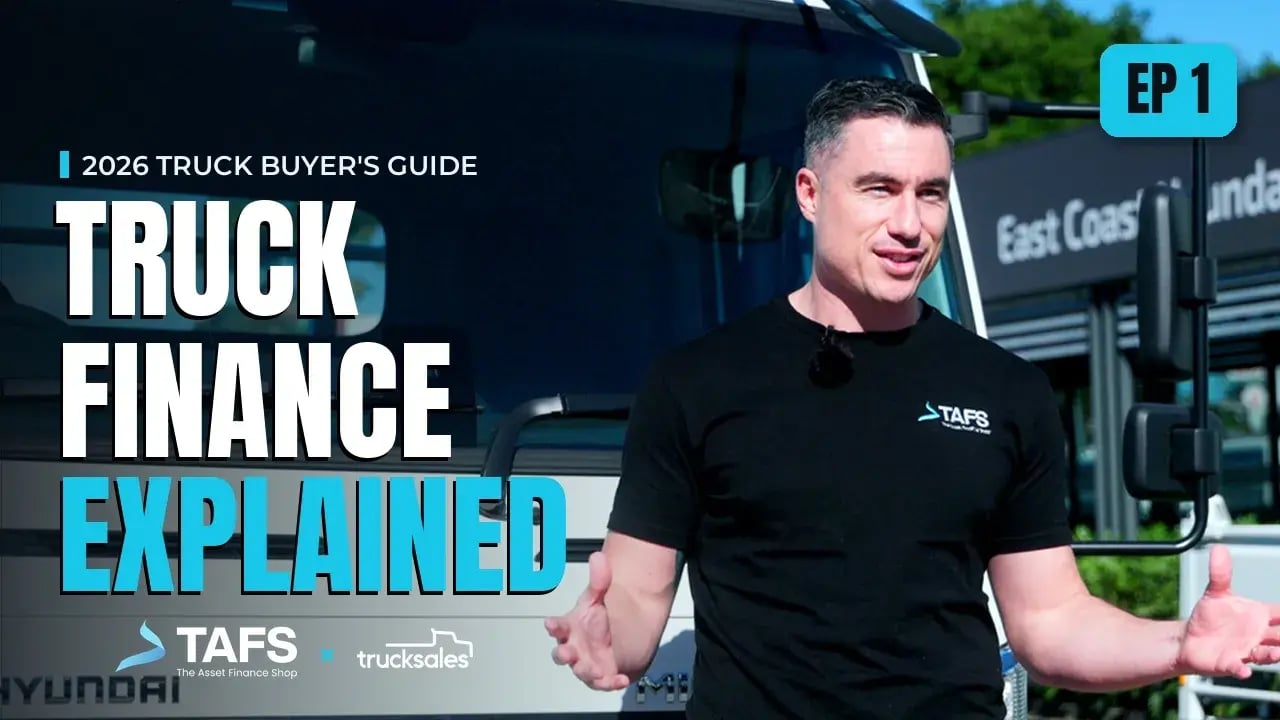
The Asset Finance Shop has partnered with Trucksales for a six-part finance series supporting the 2026 Truck Buyer’s Guide.
Across the series, TAFS Director Colin Evans is visiting truck dealerships around Australia to explore the vehicles featured in the guide and explain how commercial truck finance works in practice.
For episode one, Colin visited East Coast Trucks to take a closer look at the Hyundai Mighty range and discuss the fundamentals of financing a light-duty truck.
A Light-Duty Truck for Almost Any Business
The Hyundai Mighty is available in a range of sizes and configurations, starting with a 4.5-tonne GVM model that can be driven with a standard car licence.
Depending on the operator’s requirements, the truck can be configured with different body lengths and fitted as a:
- Tray truck
- Tipper
- Pantech
- Delivery truck
- Custom commercial vehicle
East Coast Trucks also operates an in-house body shop, allowing the team to match the truck body to the work the customer needs to complete.
This flexibility makes the Hyundai Mighty suitable for a broad range of businesses, including landscapers, plumbers, tradespeople, pallet delivery operators and businesses that have outgrown the capacity of a ute.
For many operators, moving into a light-duty truck provides additional payload, improved efficiency and a vehicle designed specifically for commercial work.
How Much Does a Hyundai Mighty Cost?
Depending on the model, body and specifications, a Hyundai Mighty can generally range from approximately $80,000 to $110,000.
A fully fitted vehicle with a larger or more specialised body can cost more.
The weekly repayment will depend on the purchase price, loan term, deposit, interest rate and whether the finance includes a balloon payment.
As discussed in the episode, a truck in this category could potentially be financed from around $390 per week, depending on the final structure and the customer’s circumstances.
Truck Finance Is Different From a Consumer Car Loan
Commercial trucks are commonly financed through a chattel mortgage.
Under a chattel mortgage, the business owns the vehicle from the beginning while the lender registers an interest over the truck until the finance has been repaid.
For GST-registered businesses, this structure can provide potential benefits that are not generally available through a standard consumer car loan.
Depending on the business and its tax position, it could be possible to:
- Claim the GST component of the purchase
- Claim interest expenses
- Depreciate the truck
- Finance up to 100% of the purchase price
- Include a balloon or residual payment
- Structure the loan over a longer term
Businesses should speak with their accountant or tax adviser about the specific tax treatment that applies to them.
Keeping Cash Inside the Business
One of the main advantages of financing a commercial truck is the ability to keep working capital available.
Rather than paying for the truck entirely from cash reserves, the business can retain funds for other operating expenses, including:
- Wages
- Fuel
- Insurance
- Servicing and repairs
- Materials and stock
- Unexpected expenses
- Future growth opportunities
This can be particularly valuable for businesses transitioning from a ute into their first truck.
The truck can begin generating income while the cost is spread across an agreed finance term.
Choosing the Right Finance Term
Consumer vehicle loans will often run for three to five years.
Commercial truck finance can sometimes be structured over five, six or even seven years, depending on the age of the truck, the business profile and the lender’s criteria.
A longer term can reduce the regular repayment and help protect business cash flow.
Some operators will prefer a shorter term to repay the truck faster, while others will choose a longer term or balloon payment to keep repayments lower.
The right structure will depend on how the vehicle will be used, the income it is expected to generate and the business’s wider financial commitments.
Can the Truck Pay for Itself?
Before purchasing a truck, operators should consider the additional income or savings the vehicle is expected to create.
This can include:
- Taking on larger jobs
- Completing more deliveries
- Carrying additional materials
- Reducing reliance on subcontractors
- Replacing vehicle hire costs
- Improving turnaround times
- Reducing the number of trips required
Once the proposed repayment is known, the business can compare the cost of the truck against the additional revenue and efficiency it is expected to provide.
The aim is to put a structure in place that the truck can comfortably support through the work it completes.
Watch Episode 1
Episode one provides a practical introduction to light-duty trucks and the finance structures available to Australian businesses.
Watch Episode 1 of the 2026 Truck Buyer’s Guide on YouTube
Read the Original Truck Buyer’s Guide
You can also read the original trucksales article for more information about the light-duty trucks featured in the guide.
Read the 2026 Light Truck Buyer’s Guide on trucksales
The Truck Buyer’s Guide finance series will continue with more dealership visits, vehicles and practical information about preparing for truck finance.
For assistance financing a new or used truck, contact The Asset Finance Shop at colin@tafs.com.au or visit www.tafs.com.au.
Finance is subject to lender approval, applicable lending criteria and the applicant’s circumstances. Tax information is general in nature and should be confirmed with a qualified accountant or tax adviser.