Farm Machinery Finance Providers Australia 2026
Read time: 15 min
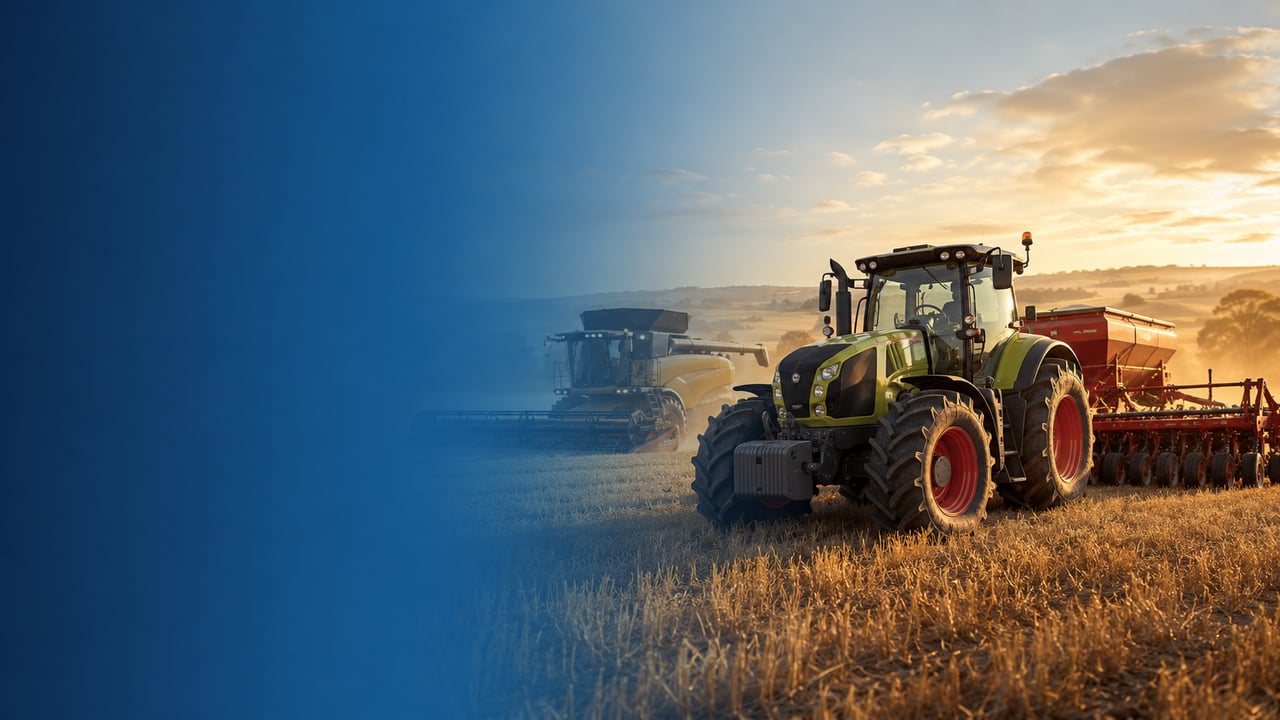
Agricultural machinery finance helps Australian farmers and agribusinesses purchase tractors, harvesters, headers and other farm equipment while spreading the cost over an agreed finance term.
The right finance provider will depend on the machinery, purchase price, business history, seasonal cash flow and documentation available. Some farmers will be well suited to a bank, while others may benefit from comparing agricultural and non-bank lenders with different equipment and credit criteria.
The Asset Finance Shop (TAFS) is a specialised asset finance broker with access to more than 80 bank and non-bank lenders. Our internal credit team reviews each application before a formal lender submission, helping farmers compare agricultural machinery finance options based on the business and equipment being purchased.
This guide explains the main farm machinery finance providers in Australia, what lenders assess and what farmers should compare before financing a tractor, harvester or other agricultural equipment.
Who Provides Agricultural Machinery Finance in Australia?
Australian farmers can access agricultural equipment financing through several types of providers.
Banks
Banks offer commercial equipment finance for agricultural businesses and can suit established farms with strong financial information and an existing banking relationship.
The bank may consider:
- Business trading history
- Financial statements
- Tax returns
- Business Activity Statements
- Bank statements
- Existing debts
- Farm income
- The machinery being purchased
- Deposit or trade-in availability
When applying directly to a bank, the application is assessed against that bank's lending criteria and available products.
Agricultural and Non-Bank Lenders
Some lenders focus on commercial equipment, farming and other business assets.
Depending on the lender, they may consider:
- Seasonal income
- Low doc applications
- Used machinery
- Private sales
- Auction purchases
- Newer businesses
- Different repayment frequencies
These lenders can provide additional options where a standard bank product doesn't suit the transaction.
Manufacturer and Dealer Finance
Some machinery manufacturers and dealers provide access to finance through an aligned lender.
This can be convenient when purchasing a new tractor or harvester directly from a dealership.
The finance options are generally linked to the lenders and products available through that supplier, so farmers may still want to compare the complete structure before proceeding.
Specialised Asset Finance Brokers
A specialised asset finance broker can compare options across multiple bank and non-bank lenders.
TAFS has access to more than 80 lenders and uses an internal credit team to assess each application before a formal submission is made.
This can be useful when the transaction involves:
- A used tractor
- A privately purchased harvester
- An auction purchase
- Seasonal income
- Low doc finance
- A newer agricultural business
- Existing machinery finance
- A larger equipment purchase
What Farm Machinery Can Be Financed?
Agricultural machinery finance can cover a broad range of farm equipment.
This can include:
- Tractors
- Harvesters
- Headers
- Seeders
- Balers
- Sprayers
- Spreaders
- Front-end loaders
- Telehandlers
- Agricultural trailers
- Irrigation equipment
- Implements
- Attachments
- Other income-producing farm machinery
Finance can be available for new and used machinery purchased through a dealer, private seller or auction, subject to lender criteria.
How Does Agricultural Machinery Finance Work?
The process generally starts with an assessment of the farm business and proposed purchase.
1. Identify the Machinery
Consider:
- What equipment is required
- Purchase price
- New or used condition
- Dealer, private sale or auction
- Expected working life
- How the machinery will improve production
- Available deposit or trade-in
- Expected replacement date
You can begin discussing finance before selecting the exact machine, although the lender will need the equipment details before settlement.
2. Complete an Initial Assessment
TAFS reviews:
- ABN and trading history
- Farming experience
- Bank statement activity
- Existing finance commitments
- Credit profile
- Seasonal income
- The machinery being purchased
- Available deposit or trade-in
TAFS begins with a soft credit check that leaves no mark on the applicant's credit file.
3. Compare Suitable Lenders
Different agricultural machinery finance providers have different requirements.
One lender may be suitable for a new tractor purchased through a dealer, while another may be better suited to a used harvester purchased privately.
TAFS assesses the application against the criteria of more than 80 lenders before selecting an option for formal submission.
4. Structure the Finance
The finance can be structured around:
- Amount financed
- Deposit
- Trade-in
- Finance term
- Repayment frequency
- Balloon payment
- Expected farm cash flow
Selected lenders may also offer repayment structures that better suit seasonal agricultural income.
5. Approval and Settlement
Once the application is approved, the lender prepares the finance documents.
After all requirements have been completed, the approved funds are paid directly to the machinery dealer, auction house or private seller.
What Is a Chattel Mortgage for Farm Machinery?
The main finance product TAFS arranges for agricultural machinery purchases is a chattel mortgage.
Under a chattel mortgage:
- The agricultural business owns the equipment from settlement
- The lender registers a security interest over the machinery
- The finance is repaid over an agreed term
- A deposit or trade-in may be included
- A balloon payment may be available
- The lender's security is removed once the finance has been repaid
A balloon payment can reduce regular repayments by leaving part of the finance amount until the end of the term.
The business may be able to claim the GST on the purchase price, along with eligible interest and depreciation deductions. Speak with your accountant about the tax treatment that applies to your circumstances.
How Do You Compare Farm Machinery Finance Providers?
The lowest advertised interest rate isn't the only factor farmers should compare.
Look at the complete finance structure.
1. Lender Experience With Agriculture
Agricultural businesses can have cash flow patterns that differ from many other industries.
Income may be influenced by:
- Harvest timing
- Livestock sales
- Commodity prices
- Weather conditions
- Seasonal production
- Contract work
A lender that understands agricultural businesses may be better equipped to assess this type of income.
2. Repayment Frequency
Standard monthly repayments won't suit every farm.
Depending on the lender, options may include:
- Monthly repayments
- Quarterly repayments
- Seasonal repayments
- Annual repayments
The available structure will depend on the lender and application.
The repayment schedule should reflect when the business earns its income without creating unnecessary pressure during quieter periods.
3. Deposit Requirements
A deposit isn't required for every farm equipment loan.
Some applications may qualify for finance covering the full purchase price, while others may require a contribution.
The lender can consider:
- Machinery age
- Purchase price
- Market value
- Business history
- Credit position
- Documentation
- Finance amount
- Available working capital
A trade-in can sometimes be used as the business's contribution.
4. Finance Term
The finance term should suit the machinery and the business.
A longer term can reduce regular repayments but will keep the debt outstanding for longer.
Consider:
- Equipment age
- Annual operating hours
- Expected working life
- Maintenance costs
- Replacement plans
- Expected resale value
Older machinery may have shorter maximum terms available.
5. Balloon Payment
A balloon leaves part of the loan amount until the end of the finance term.
This can reduce regular repayments, but the business will need to manage the final amount later.
Before choosing a balloon, consider:
- Expected machinery value
- Replacement plans
- Annual usage
- Future trade-in value
- Whether the business can pay the final amount
- Whether refinancing may be needed
The balloon should make sense for the asset and the expected value at the end of the term.
6. New and Used Equipment Criteria
Some lenders are more comfortable with older agricultural machinery than others.
For used equipment, the lender may assess:
- Year of manufacture
- Operating hours
- Condition
- Service history
- Purchase price
- Market value
- Manufacturer
- Remaining working life
The available term and deposit requirement may change as the machinery gets older.
7. Dealer, Auction and Private-Sale Finance
Where the machinery is purchased can affect the available lender options.
Dealer Purchases
Dealer transactions are usually straightforward because the seller can provide formal invoices and machinery information.
Private Sales
Private purchases may require additional checks on:
- Seller identity
- Machinery ownership
- Serial numbers
- Existing finance
- Market value
- Equipment condition
Auctions
Auction purchases can require quick settlement.
Pre-approval may be available so the farmer understands the available finance amount before bidding.
8. Documentation Requirements
Different lenders require different levels of financial information.
An established agricultural business may provide:
- Financial statements
- Tax returns
- Business Activity Statements
- Bank statements
- Existing finance details
Selected lenders may also offer low doc agricultural machinery finance.
A low doc application may instead use:
- Recent business bank statements
- ABN details
- Credit history
- Business history
- Details of agricultural income
- Assets and liabilities
- Machinery information
Agricultural Machinery Finance Provider Comparison
|
Factor |
Bank Direct |
Manufacturer or Dealer Finance |
Specialised Asset Finance Broker |
|
Lenders compared |
One bank |
Usually linked provider |
Multiple lenders |
|
Agricultural focus |
Depends on bank |
Usually strong for that equipment brand |
Can compare lenders with different agricultural criteria |
|
Used equipment |
Subject to policy |
May focus on dealer equipment |
Available through selected lenders |
|
Private sales |
Depends on lender |
Usually limited |
Available through selected lenders |
|
Auctions |
Depends on lender |
Limited |
Available through selected lenders |
|
Low doc options |
Depends on bank |
Depends on provider |
Can compare selected low doc lenders |
|
Seasonal repayments |
May be available |
May be available |
Can compare lenders offering suitable structures |
|
Application support |
Direct with lender |
Through dealer/provider |
Broker manages lender submission and settlement |
The right provider depends on the business, machinery and transaction.
Tractor Financing in Australia
Tractor financing is one of the most common forms of agricultural machinery finance.
Lenders may assess:
- Manufacturer
- Model
- Horsepower
- Age
- Operating hours
- Purchase price
- Attachments
- Intended use
- Expected working life
New and used tractors can be financed through dealers, private sellers and auctions.
Attachments and implements may also be included in the same finance facility when they form part of the purchase.
Harvester Financing in Australia
Harvesters and headers can require a different assessment because they are often higher-value and used heavily during specific periods of the year.
The lender may consider:
- Crop type
- Expected seasonal income
- Annual operating hours
- Machinery age
- Service history
- Remaining working life
- Market value
- Expected resale value
- Existing contractor costs
- Production benefits
Older or higher-value harvesters may require an inspection or valuation.
The finance structure should reflect the value of the equipment and when the farm generates its income.
Can Farmers Finance Used Machinery?
Yes. Used agricultural machinery can be financed through selected lenders.
This can include machinery purchased from:
- Dealers
- Private sellers
- Auctions
- Other farmers
- Equipment importers
The lender will consider the machinery's age, condition, value and remaining working life.
Older equipment doesn't automatically prevent finance, but it can reduce the available term or lender options.
Can Farmers Finance Machinery From a Private Seller?
Yes. Selected agricultural machinery finance providers will consider private-sale equipment.
Additional checks may include:
- Seller identification
- Proof of ownership
- Machinery serial number
- Market value
- Existing security interests
- Equipment condition
TAFS can coordinate the required information between the farmer, seller and lender.
Can Farmers Get Low Doc Machinery Finance?
Yes. Low doc agricultural equipment financing may be available through selected lenders.
The application may be assessed using:
- Recent business bank statements
- ABN details
- Farming history
- Credit profile
- Agricultural income
- Existing debts
- Machinery details
- Assets and liabilities
Low doc doesn't mean no assessment.
The lender still needs to be satisfied that the business can afford the proposed repayments.
Can a Sole Trader Farmer Get Machinery Finance?
Yes. Sole traders can apply for agricultural machinery finance.
The lender may assess:
- ABN history
- Farming experience
- Bank statement income
- Credit history
- Existing debts
- Farm operations
- Machinery value
- Deposit or trade-in
Complete financial statements aren't always required when a suitable low doc lending option is available.
Can a New Agricultural Business Get Machinery Finance?
A newer agricultural business may still qualify for farm equipment loans.
Selected lenders may consider:
- Previous farming experience
- Existing property or agricultural operations
- Expected business income
- Contracts
- Bank statements
- Assets and liabilities
- Credit history
- Deposit availability
- Machinery being purchased
The stronger the complete application, the more options may be available.
Do You Need a Deposit for Farm Equipment Loans?
Not every machinery finance application requires a deposit.
The lender may request one depending on:
- Business history
- Machinery age
- Purchase price
- Equipment value
- Financial position
- Credit history
- Available documentation
- Finance amount
A trade-in can sometimes replace or reduce the cash deposit needed.
Can You Get Pre-Approval for Farm Machinery?
Pre-approval may be available through selected lenders.
This can help farmers understand:
- Approximate borrowing capacity
- Deposit requirements
- Expected repayments
- Suitable machinery age
- Finance term
- Conditions that need to be met
Final approval will depend on the equipment eventually purchased.
Pre-approval can be particularly useful before an auction or when equipment becomes available during a busy season.
What Documents Are Needed for Agricultural Machinery Finance?
For an initial assessment, you may need:
- Driver's licence
- ABN and business details
- Recent bank statements
- Details of farming experience
- Existing finance information
- A summary of assets and liabilities
The lender may later request:
- Dealer invoice
- Auction invoice
- Private seller details
- Machinery serial number
- Operating hours
- Service history
- Inspection report
- Valuation
- Business Activity Statements
- Tax returns
- Financial statements
Requirements will depend on the lender, equipment and finance amount.
How Fast Can Farm Machinery Finance Be Approved?
Straightforward agricultural machinery finance applications can be approved in as little as 24 hours once the required information is available.
Applications may take longer where they involve:
- Newer businesses
- Limited financial information
- Older machinery
- Private sales
- Auctions
- High-value harvesters
- Valuations
- Equipment inspections
- More complex business structures
Preparing the finance application before the machinery is urgently required can help reduce settlement pressure.
How the TAFS Agricultural Machinery Finance Process Works
1. Initial Assessment
TAFS reviews the agricultural business, machinery requirement and available financial information.
2. Soft Credit Check
The initial assessment includes a soft credit check that leaves no mark on the applicant's credit file.
3. Internal Credit Review
The TAFS internal credit team assesses the application against the criteria of more than 80 lenders.
4. Compare Suitable Options
Available finance options are reviewed based on the farmer, machinery and proposed transaction.
5. Submit One Formal Application
Once a suitable option has been selected, the application is submitted to the chosen lender.
6. Approval and Settlement
TAFS coordinates the lender requirements, finance documents and payment to the machinery seller.
Questions to Ask a Farm Machinery Finance Provider
Before proceeding, ask:
- Do you regularly finance agricultural machinery?
- Can you finance the machinery I'm buying?
- Are used tractors and harvesters accepted?
- Can private-sale machinery be financed?
- Is auction finance available?
- What financial documents are required?
- Are low doc options available?
- Are seasonal repayments available?
- Is a deposit required?
- Can a trade-in be used?
- What is the interest rate?
- What will the repayment be?
- How long is the finance term?
- Is there a balloon payment?
- What is the total estimated amount repayable?
- How quickly can approval and settlement happen?
Frequently Asked Questions
Who Are the Top Machinery Finance Providers in Australia for Farmers?
Australian farmers can access machinery finance through banks, agricultural and non-bank lenders, manufacturer or dealer finance and specialised asset finance brokers.
The best provider depends on the farm's financial position, machinery, purchase method and preferred repayment structure.
TAFS can compare suitable agricultural machinery finance options through access to more than 80 lenders.
What Is the Best Agricultural Machinery Finance?
The best agricultural machinery finance should suit the farm's income cycle, machinery and overall financial position.
Compare the interest rate, repayment frequency, deposit, term, balloon, total cost and documentation requirements.
Can I Finance a Tractor?
Yes. New and used tractors can be financed through selected lenders.
Dealer, private-sale and auction purchases may all be considered.
Can I Finance a Harvester?
Yes. Harvester financing is available for eligible agricultural businesses.
The lender will consider the machine's value, age, condition and how it will contribute to the farm's operations.
Can I Finance Used Farm Machinery?
Yes. Used agricultural equipment can be financed through selected lenders.
The available term and structure will depend on the machinery's age, condition and expected working life.
Can I Finance Machinery From Another Farmer?
Yes. Private-sale agricultural machinery finance is available through selected lenders.
Additional seller, ownership and equipment checks may be required.
Are Seasonal Repayments Available?
Selected lenders may offer repayment schedules designed around agricultural income cycles.
Availability depends on the lender and application.
Do I Need Full Financial Statements?
Not always.
Low doc agricultural machinery finance may be available using bank statements and other supporting business information.
Do I Need a Deposit?
A deposit isn't required for every application.
The lender may request one depending on the machinery, business, finance amount and overall application.
How Quickly Can TAFS Arrange Agricultural Machinery Finance?
TAFS can arrange approvals in as little as 24 hours for straightforward applications with the required information available.
More complex transactions may take longer where equipment inspections, valuations or additional financial information are required.
Compare Farm Machinery Finance With TAFS
TAFS can assess your agricultural business and proposed machinery purchase before comparing suitable finance options through access to more than 80 lenders.
Start with a no-obligation assessment and a soft credit check that leaves no mark on your file. Contact The Asset Finance Shop or apply online at www.tafs.com.au.
The Asset Finance Shop (TAFS) is a commercial asset finance brokerage based in Sydney.
Information on this page is general in nature and doesn't take your personal circumstances into account. Speak to a TAFS broker for options tailored to your business, and to your accountant regarding tax treatment.